



I.AM.ISIGO’s Sacred Ecologies Turns the Body Into a Living Landscape
James Cochrane
For Spring/Summer 2027, Bubu Ogisi explores land, memory and indigenous knowledge through a collection that feels part sculpture, part ritual, part fever dream.
What if a garment could remember?
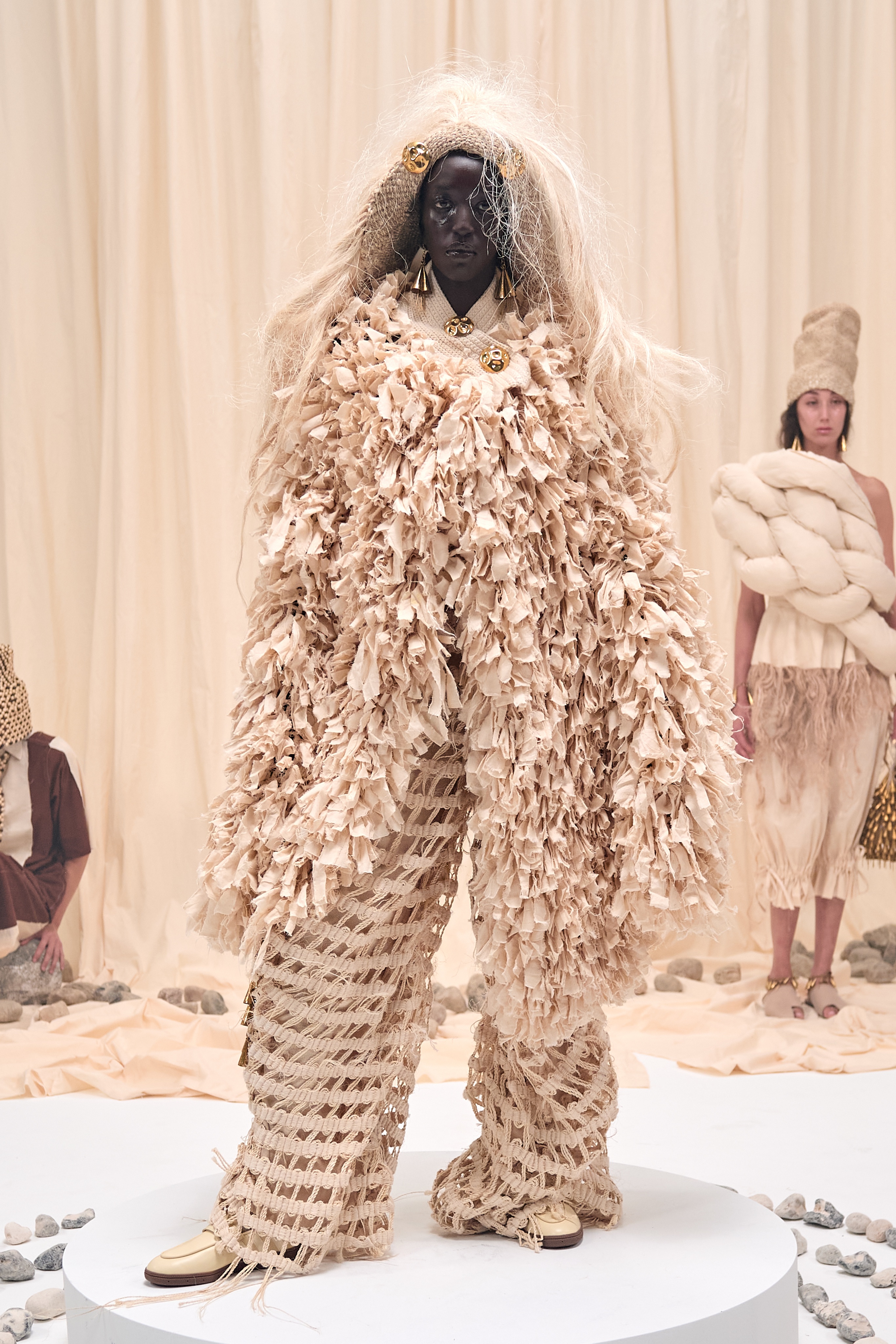
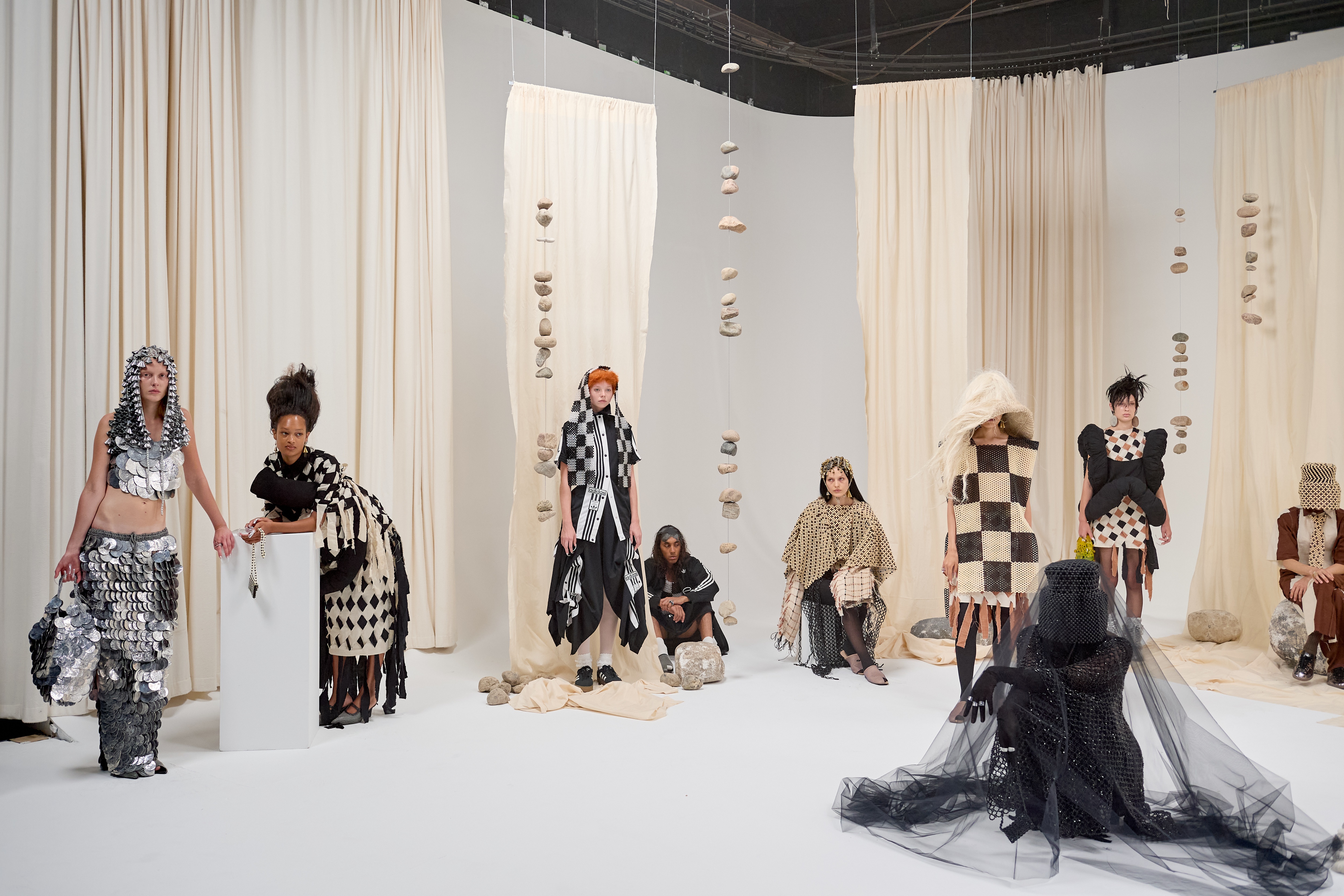
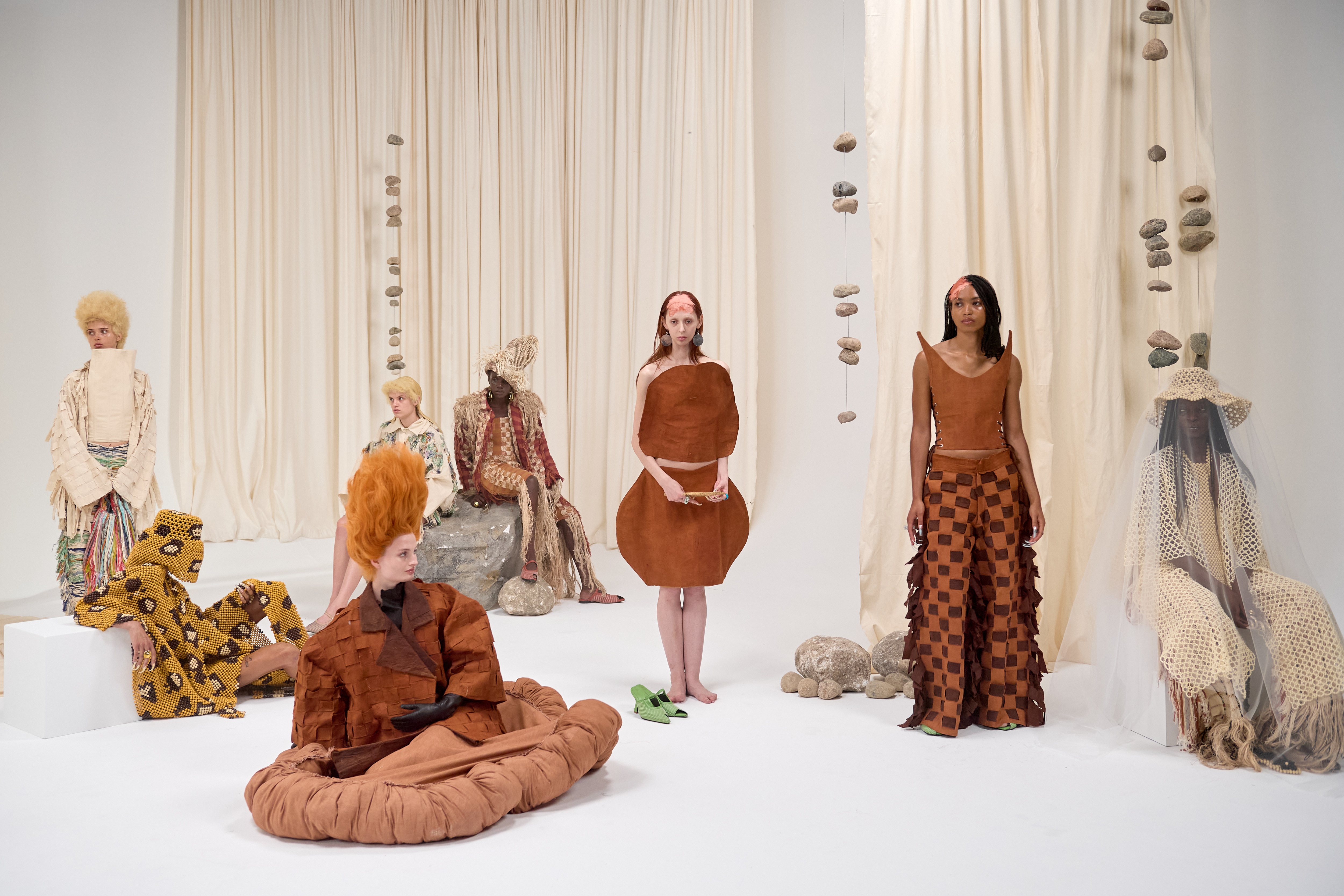
For Spring/Summer 2027, Bubu Ogisi’s I.AM.ISIGO asks that question through Sacred Ecologies, a collection where cloth becomes archive and the body becomes terrain. Drawing on ancestral textile knowledge, Ogisi looks to land and ecology as living systems of memory, places where history, identity and knowledge remain in constant motion.
The collection takes its cue from Ngũgĩ wa Thiong’o’s Wizard of the Crow, whose fictional Aburĩria is a landscape shaped by both political oppression and environmental destruction. Nature, in Ngũgĩ’s world, is never passive; it watches, remembers and resists.
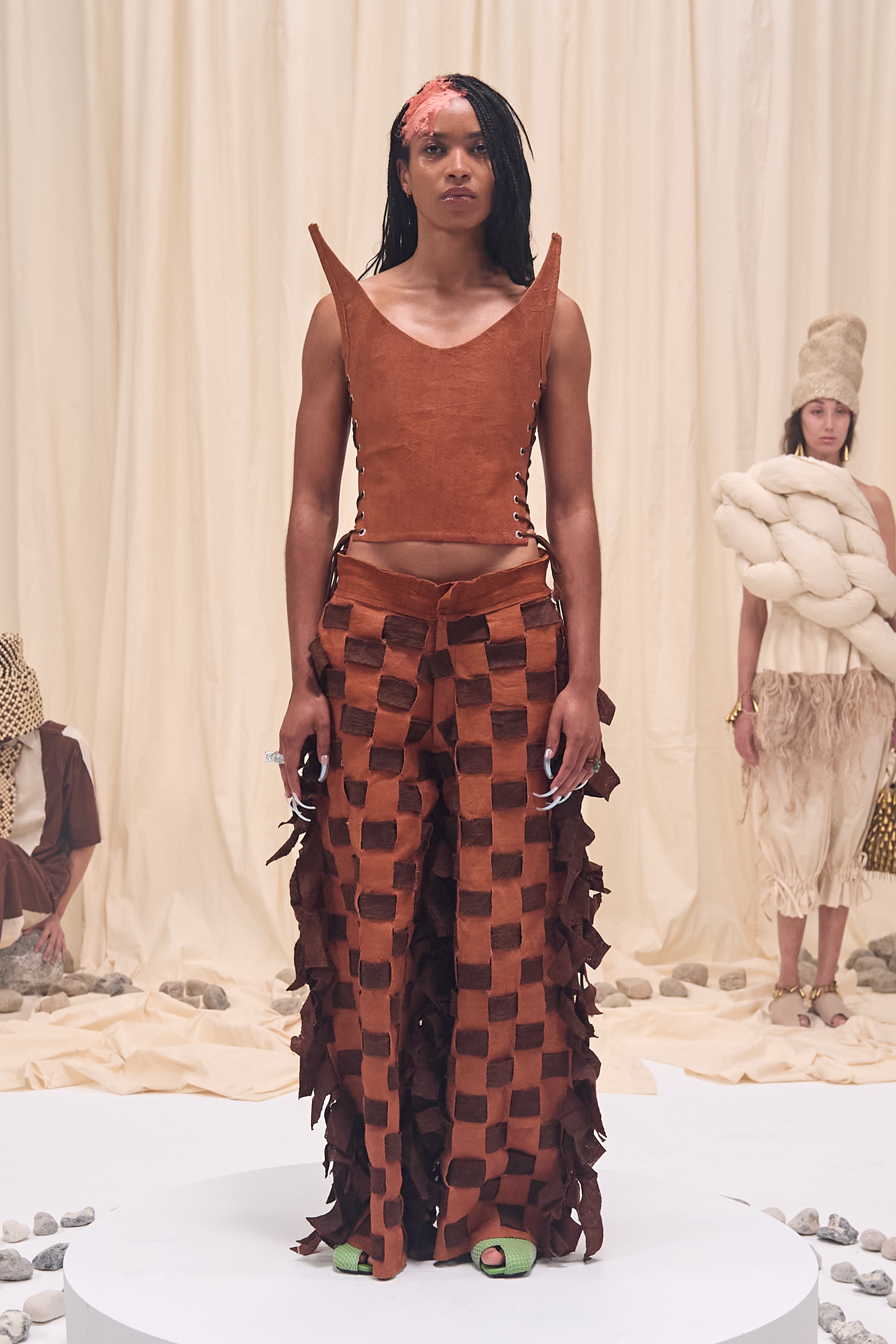
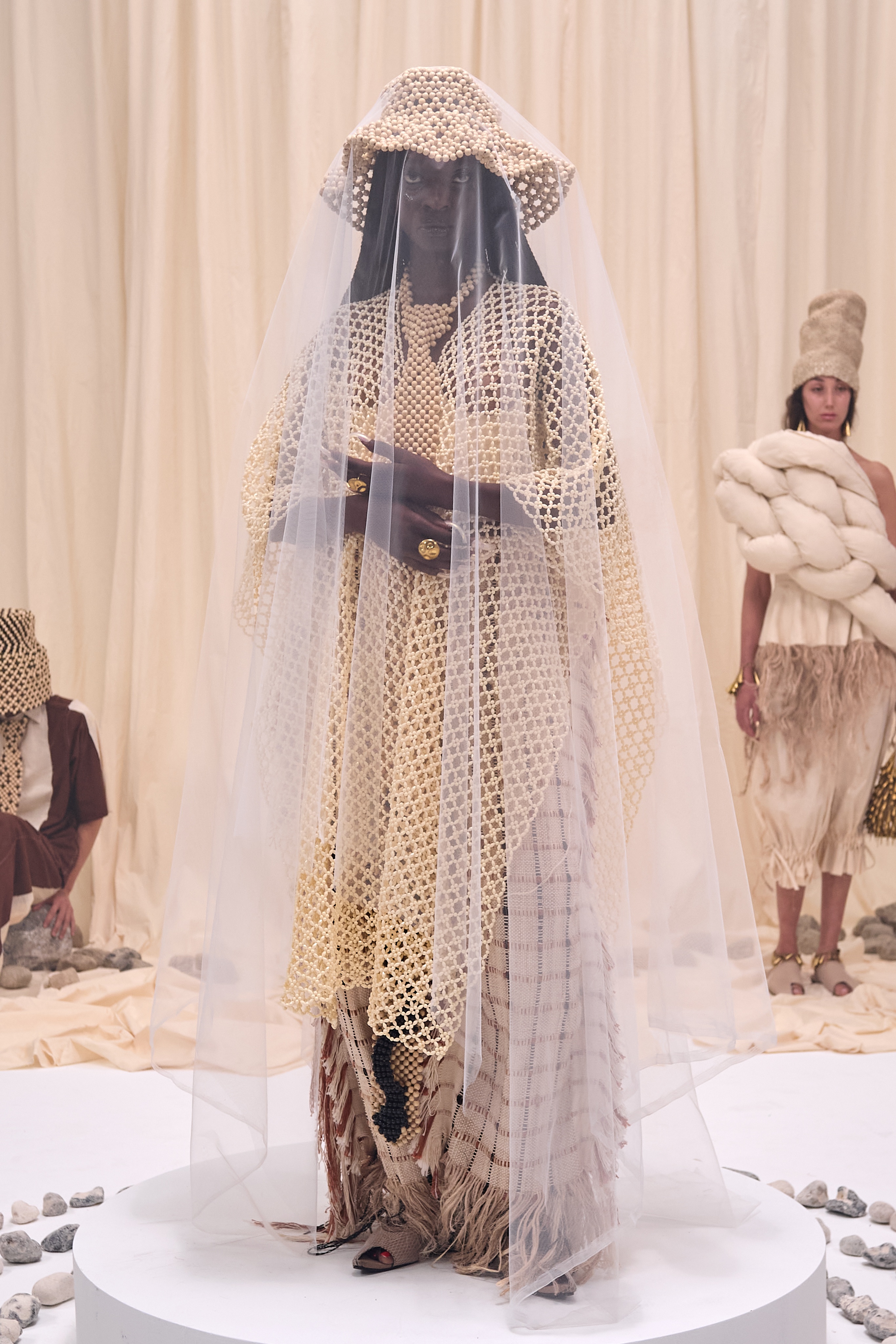
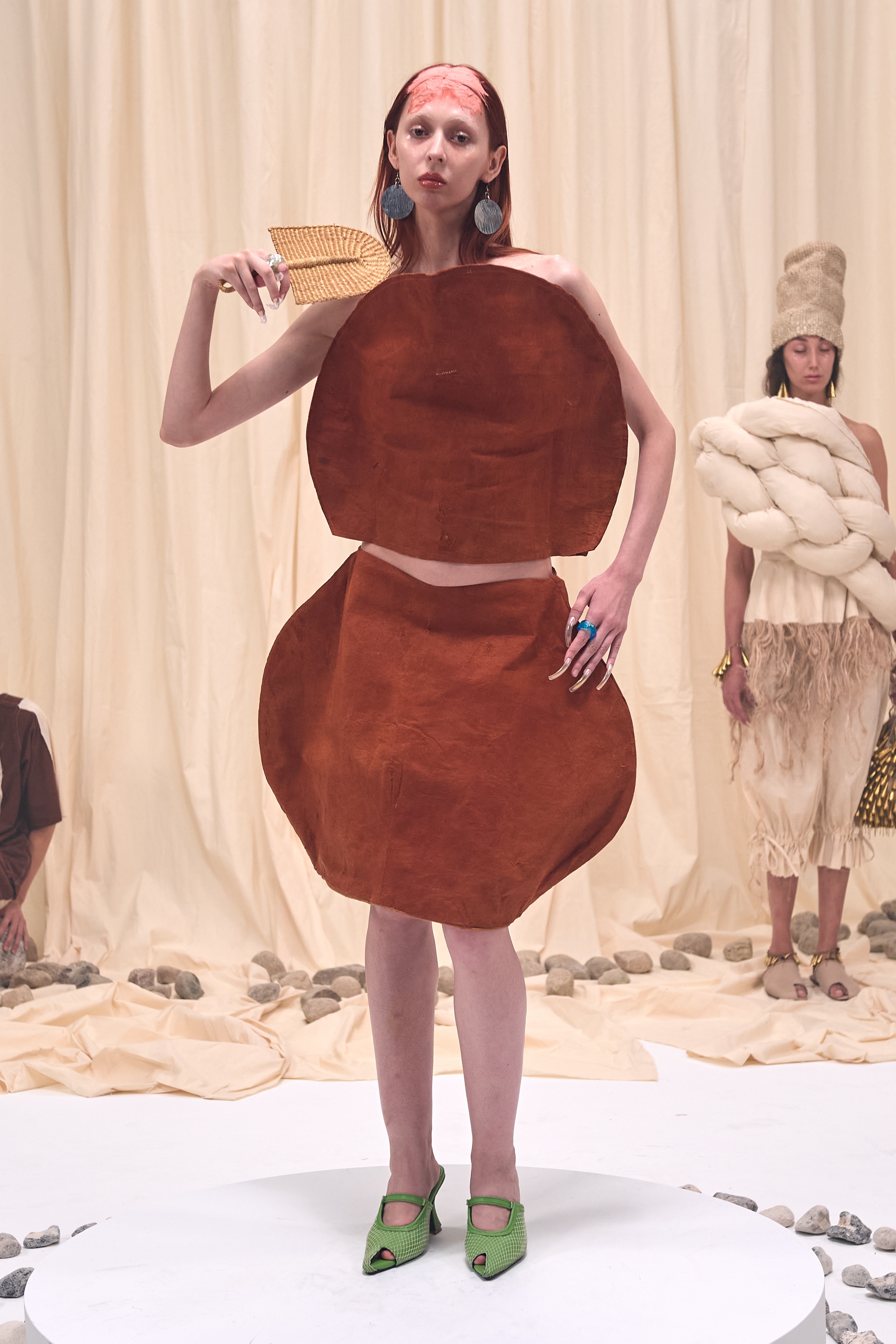
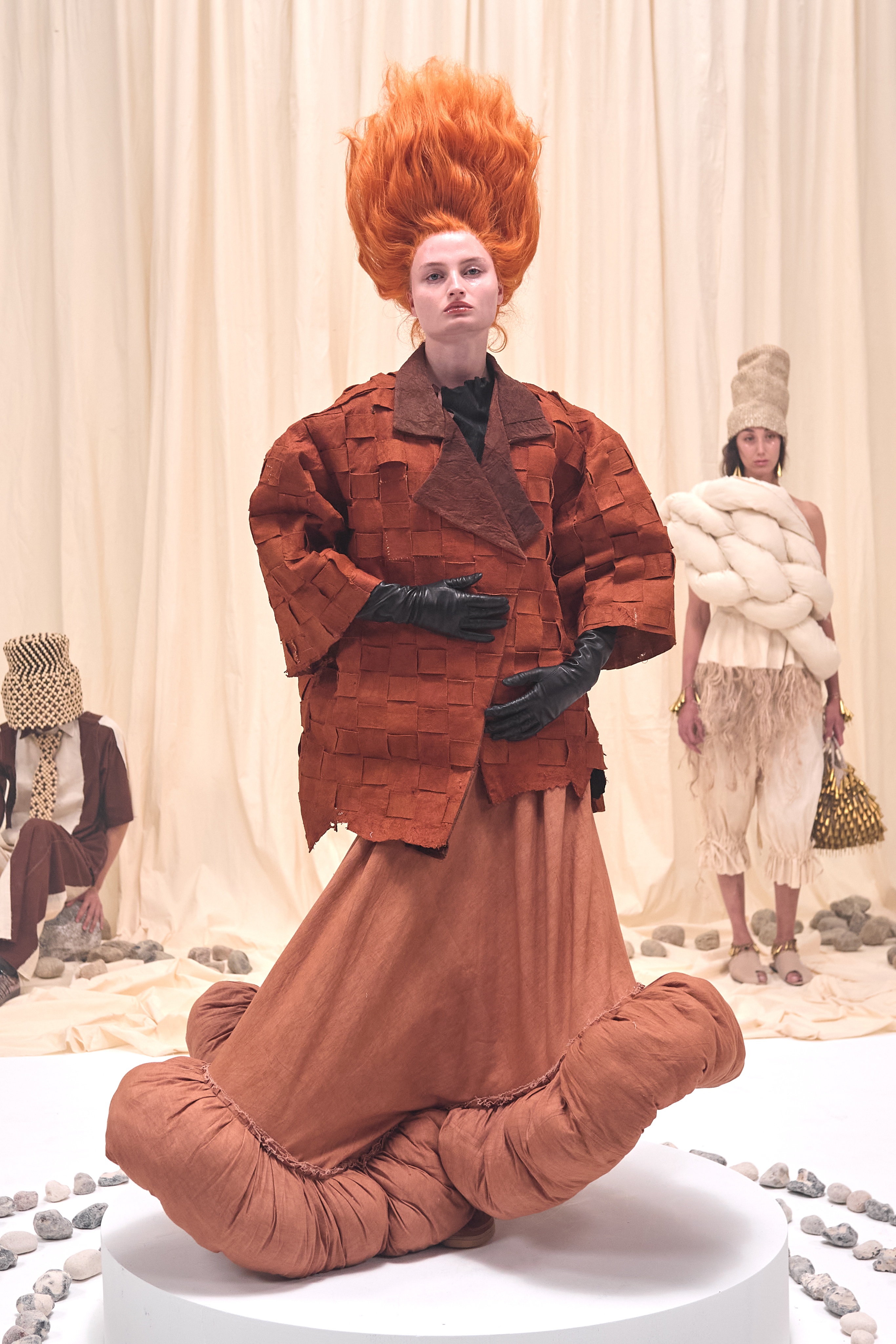
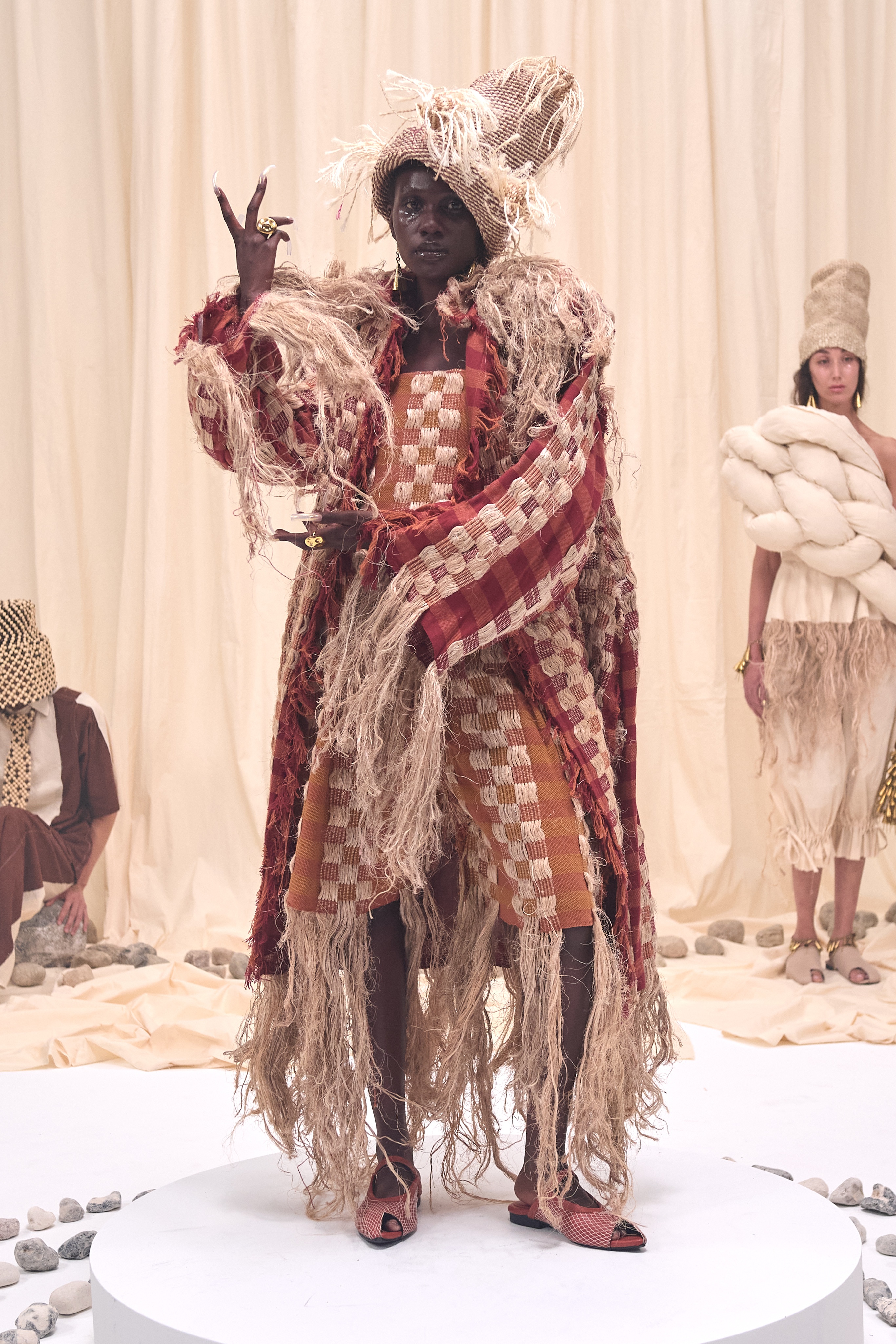
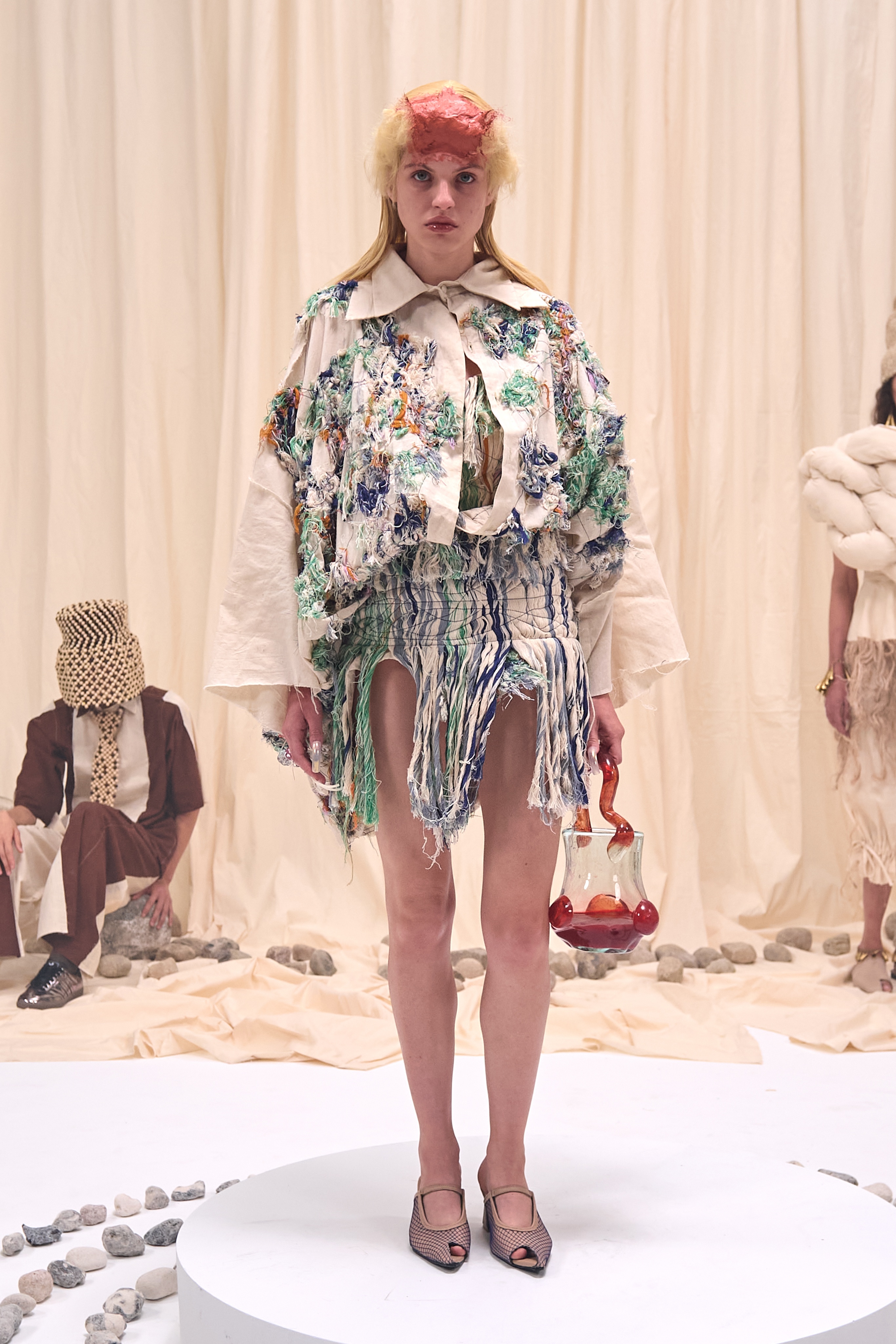
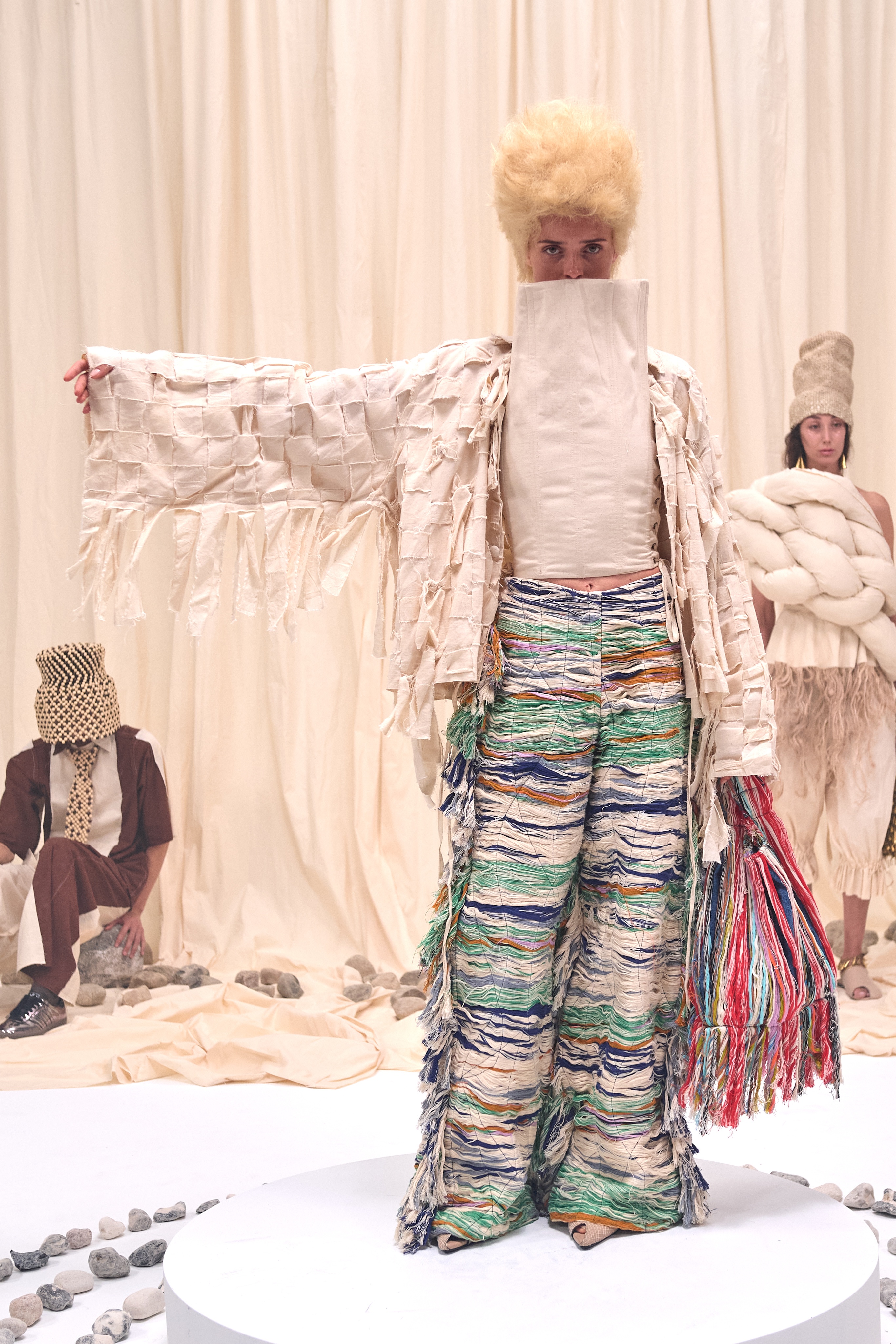
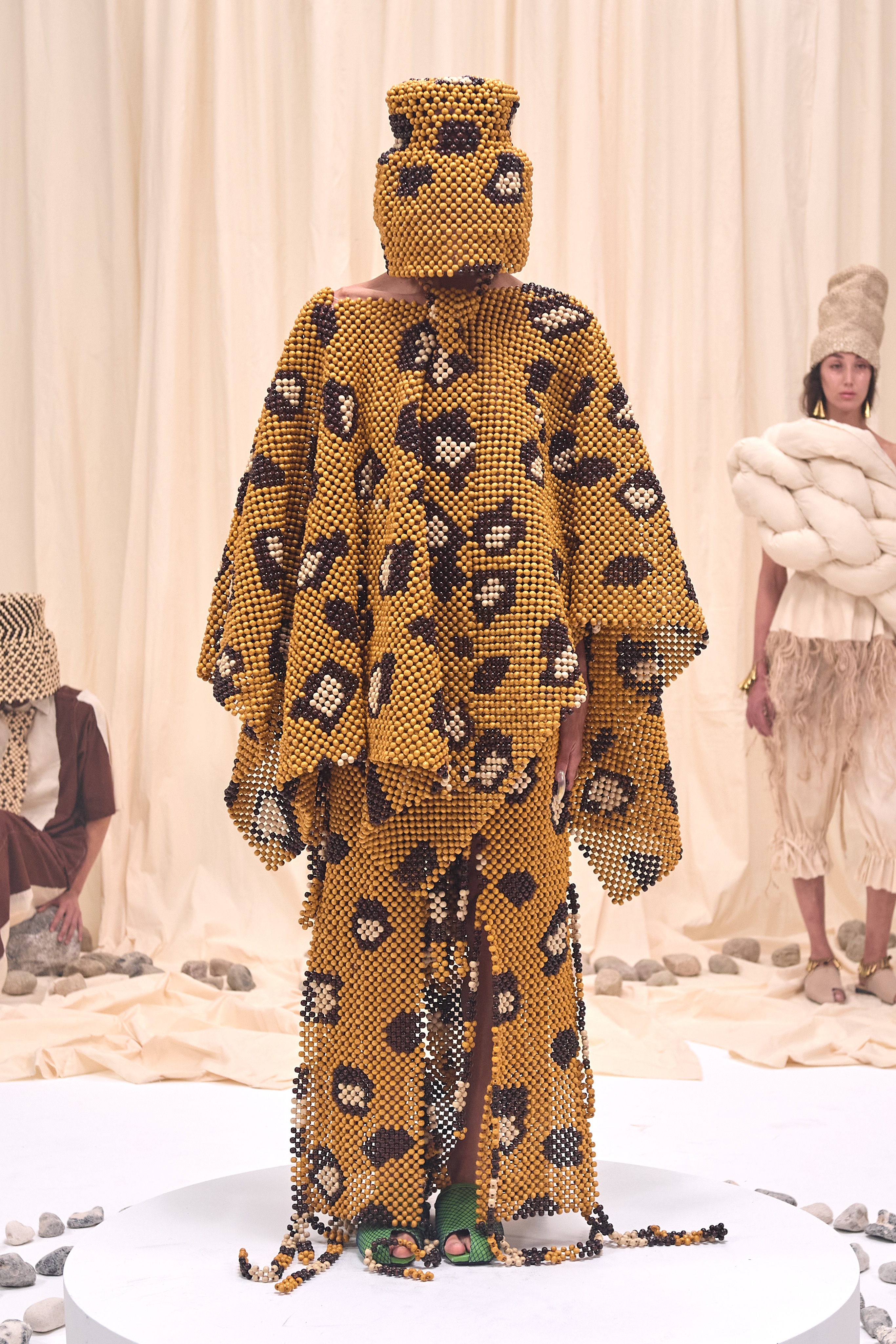
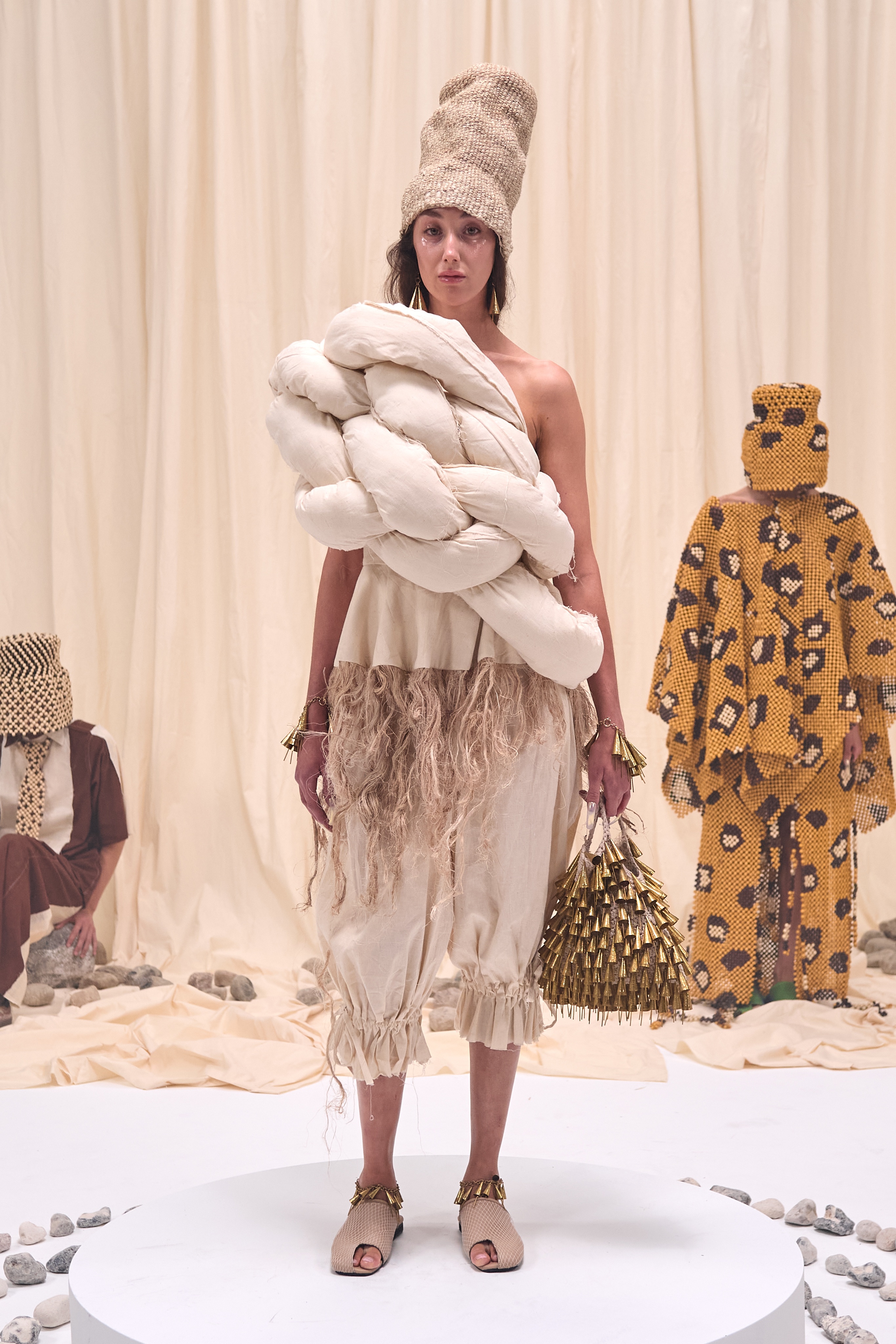
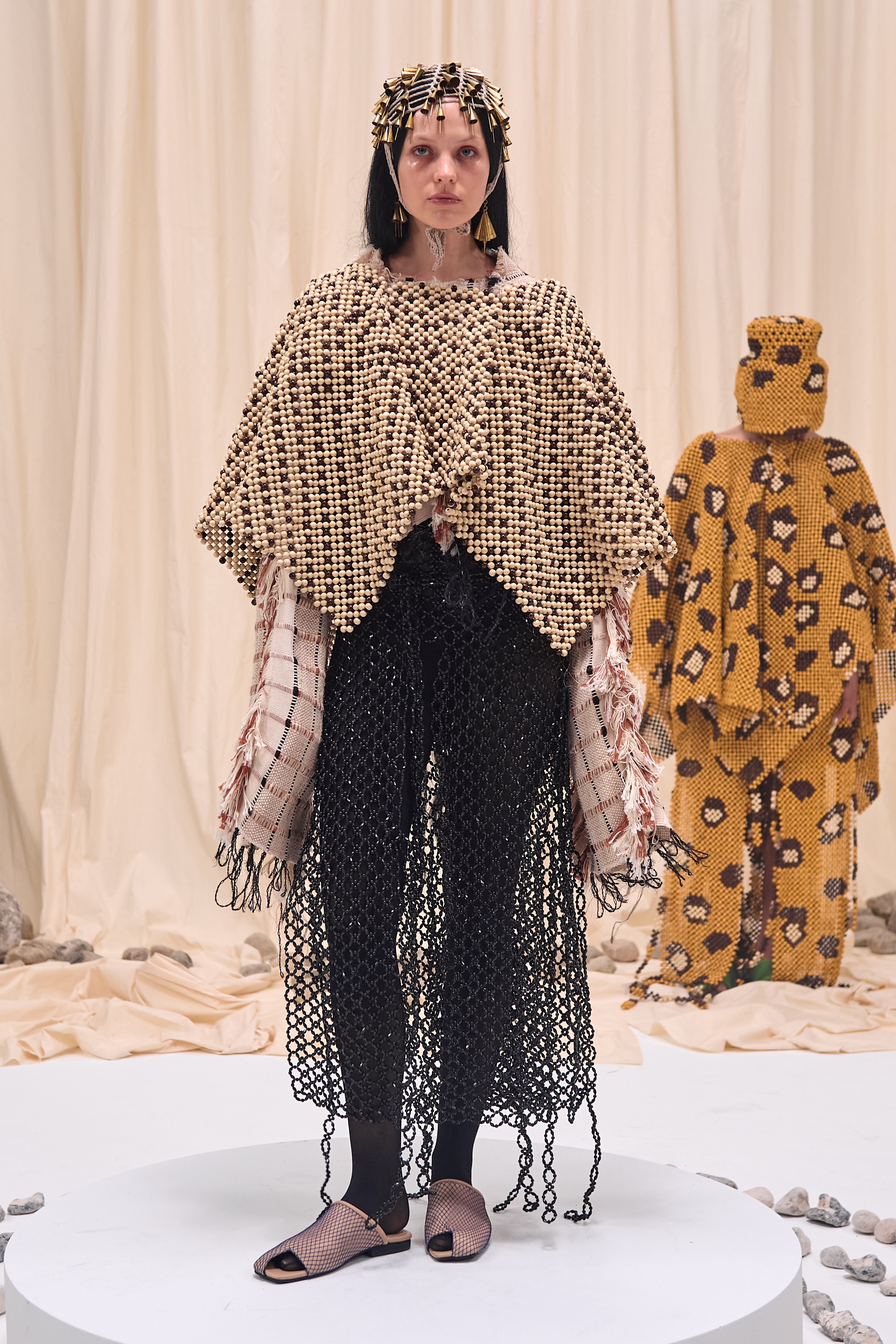
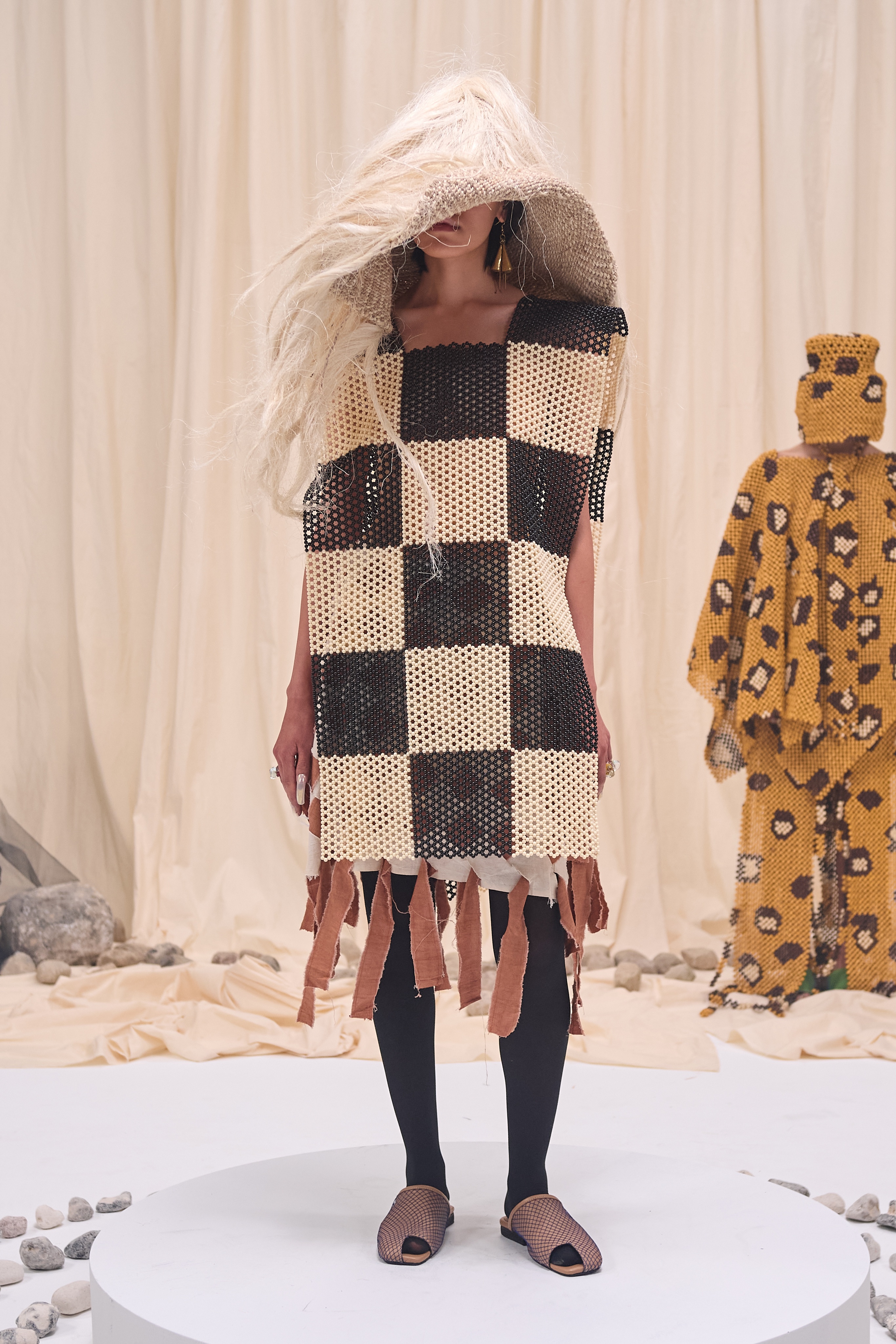
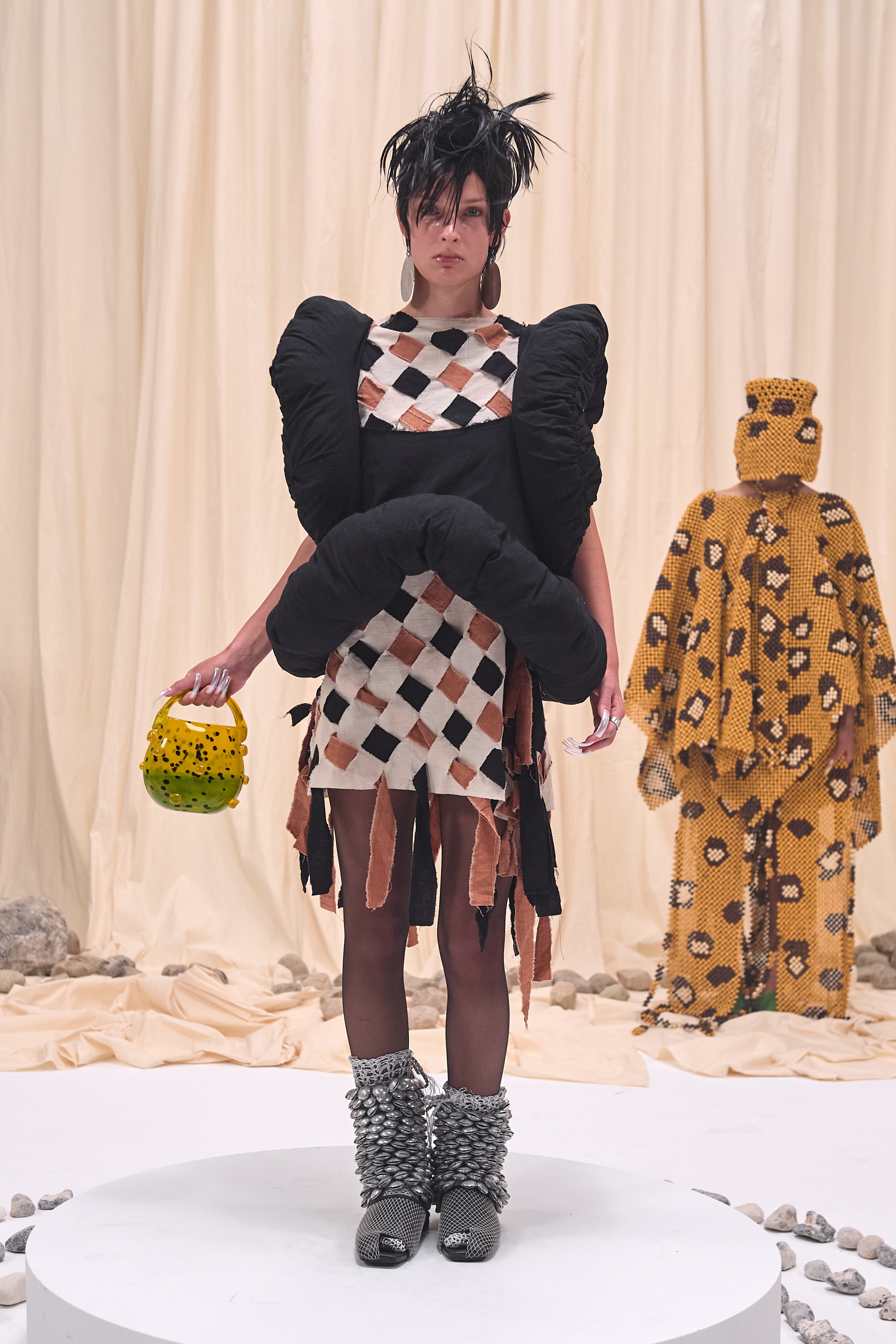
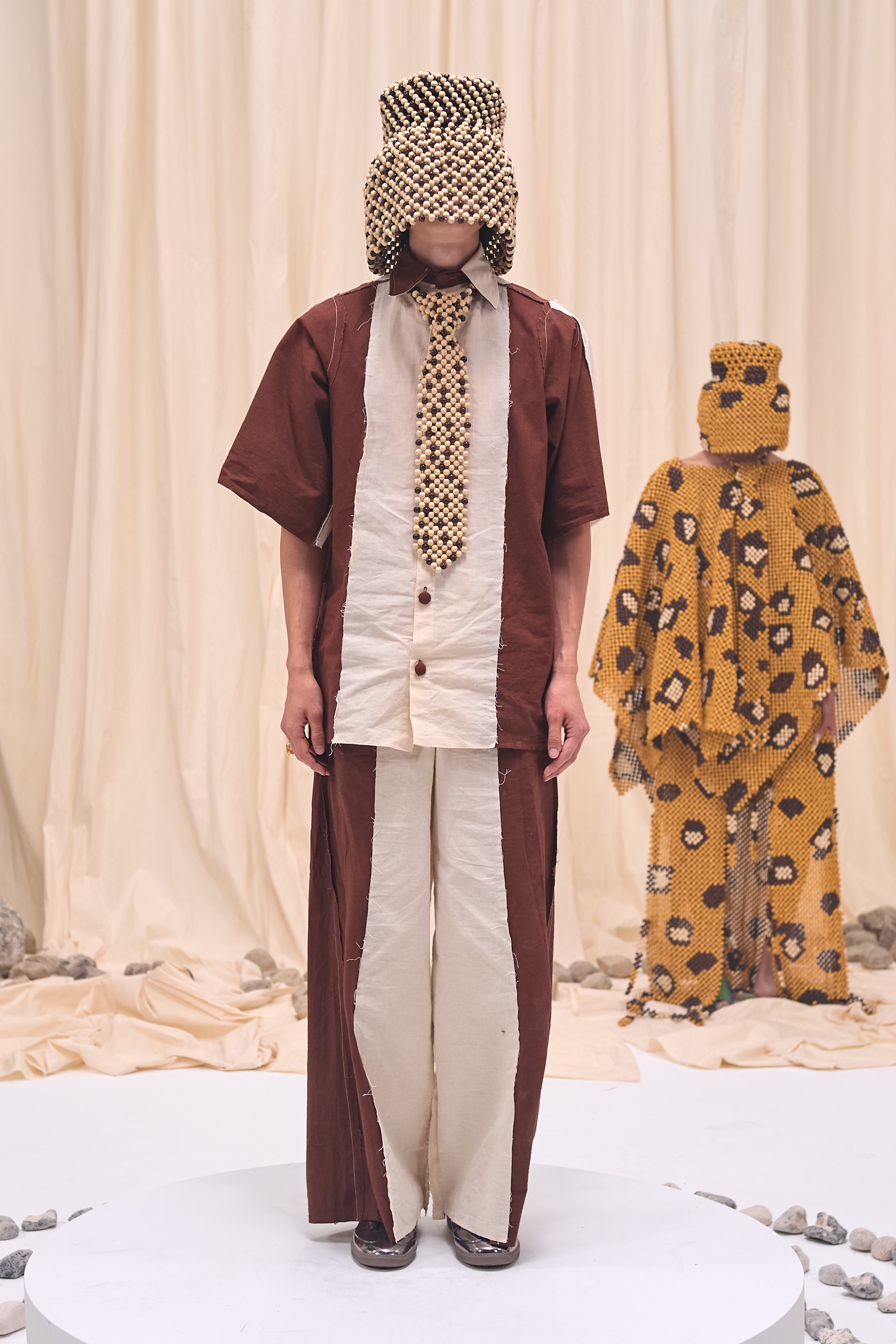
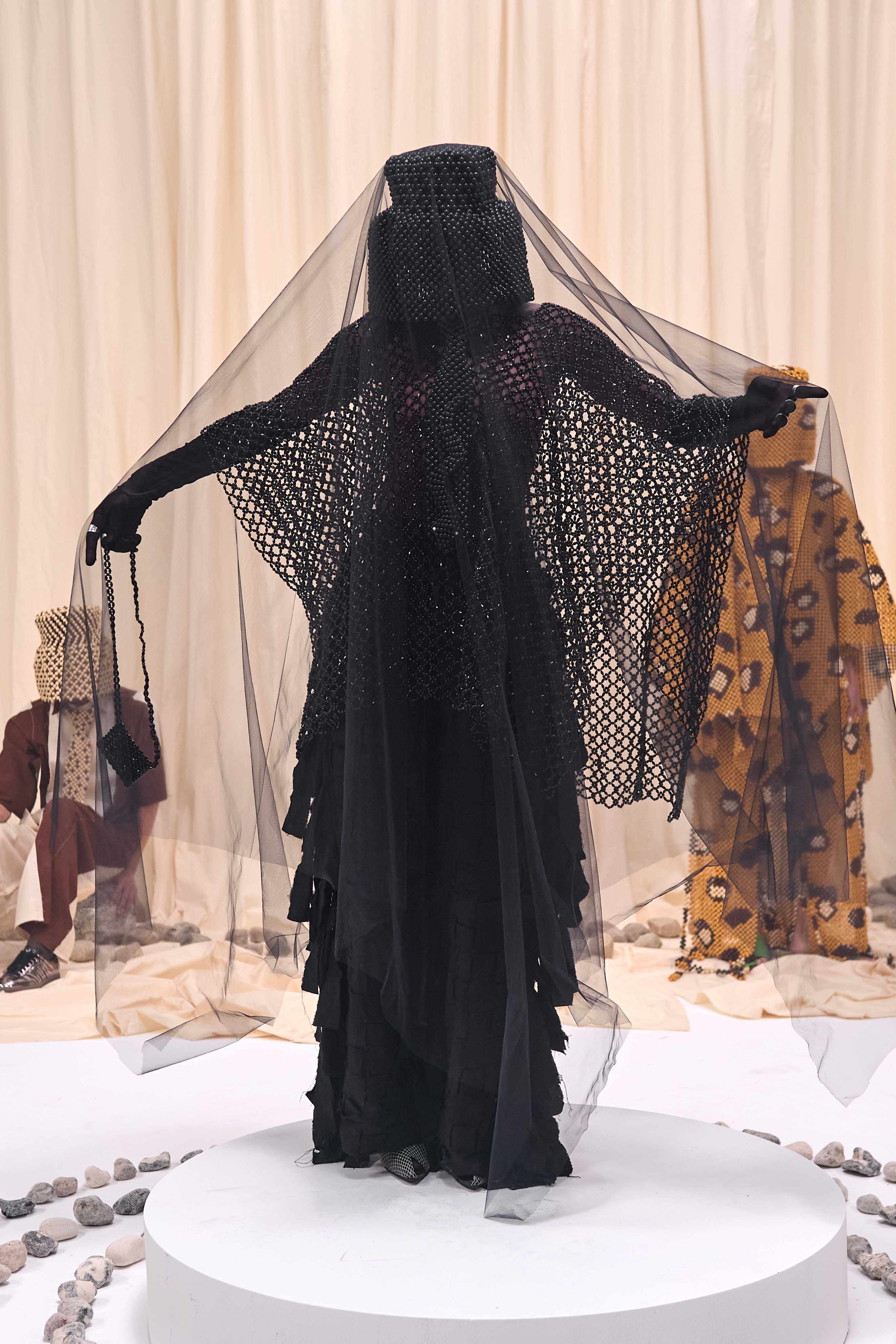
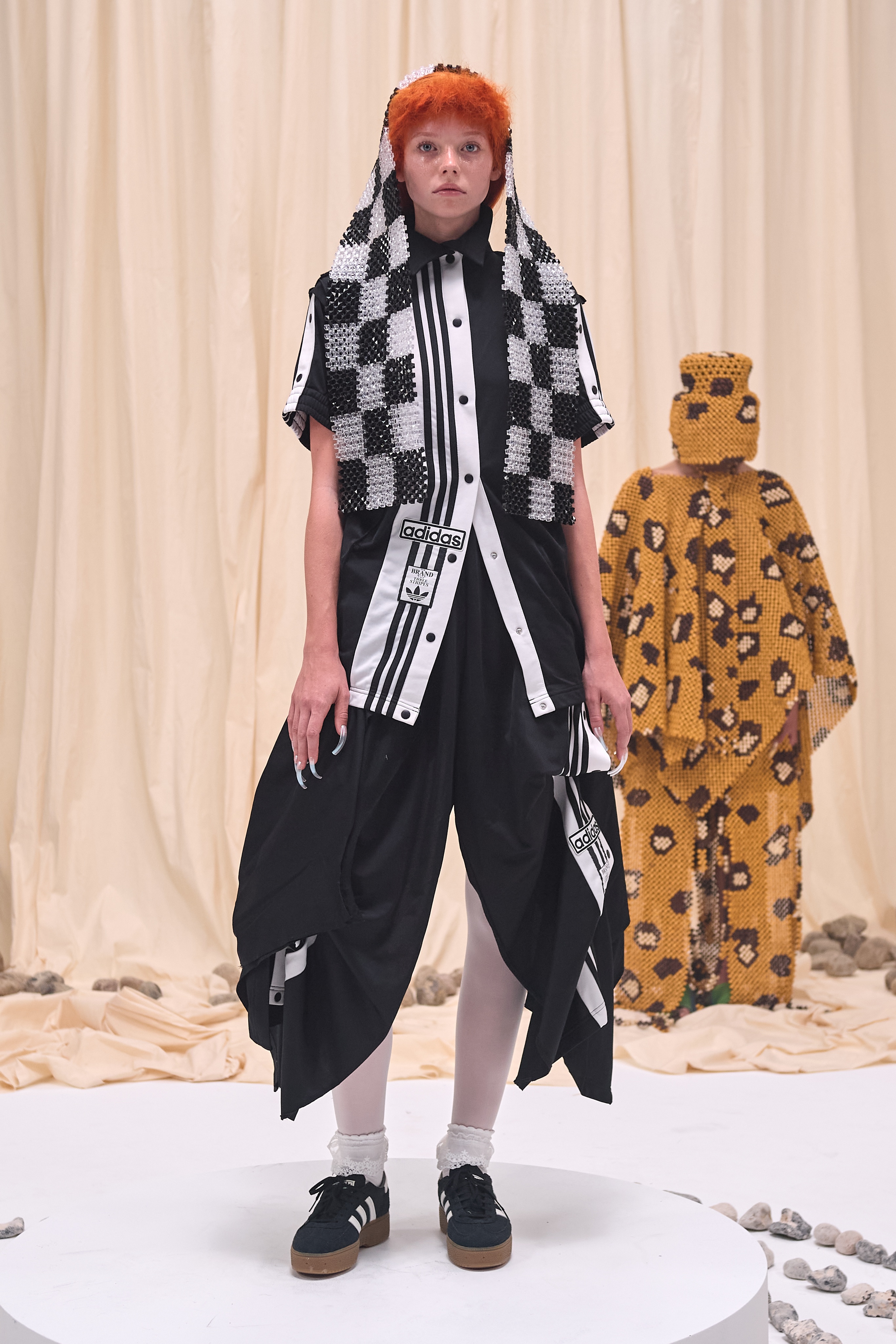
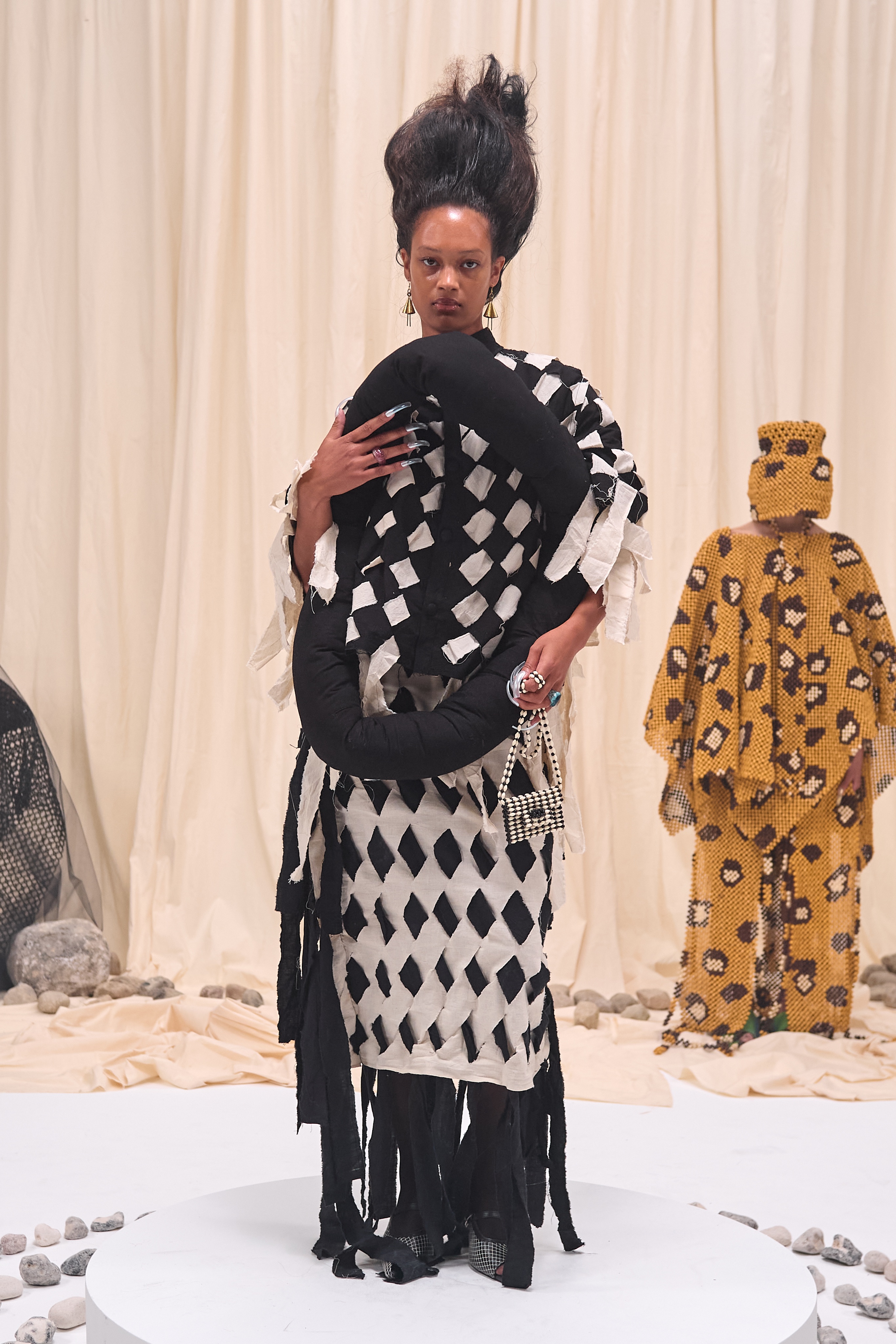
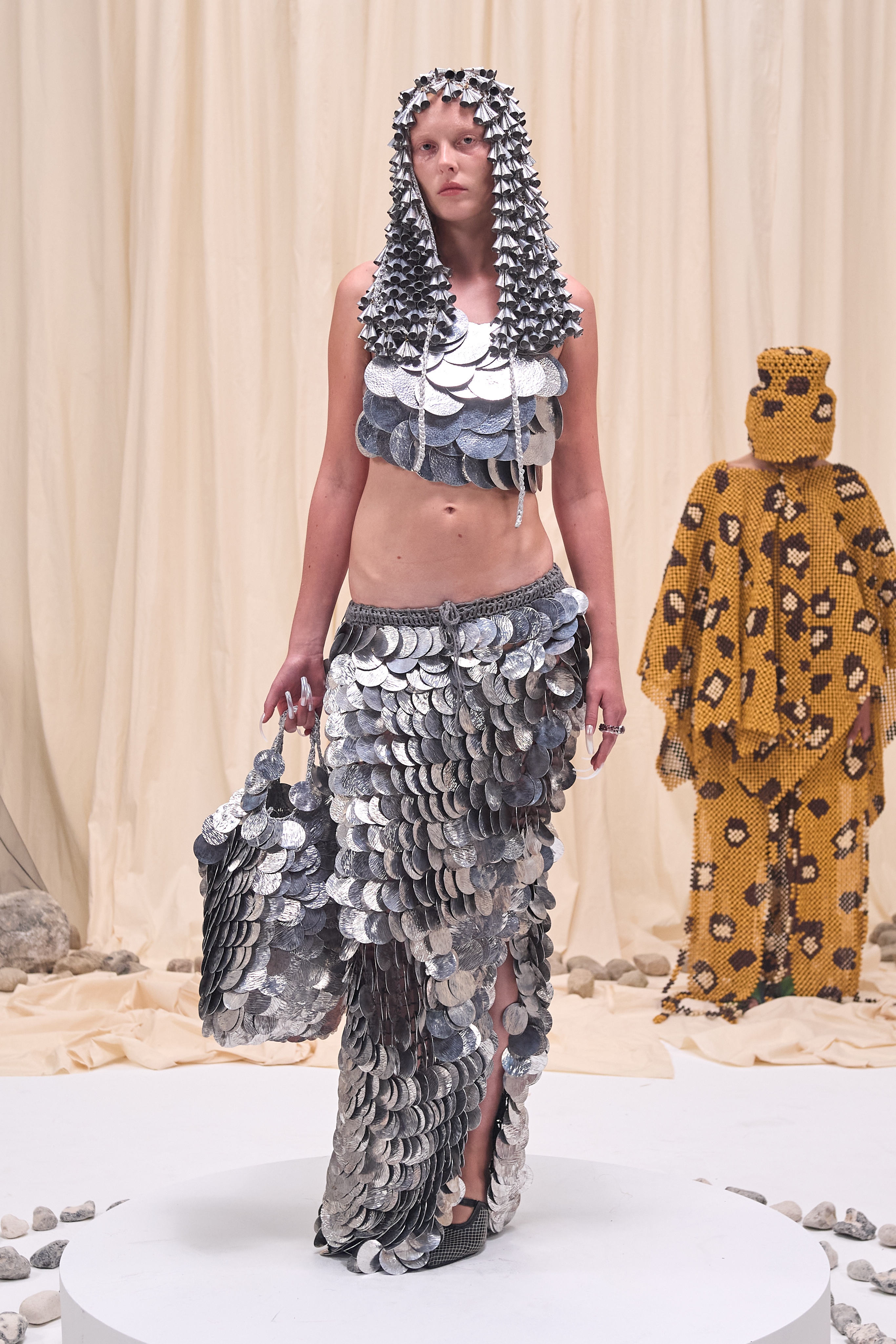
Ogisi brings that tension to the body. Sculptural silhouettes recall the lukasa, the Luba memory board, a tactile constellation of wood, beads and shell used to hold genealogy, migration and sacred geography. Here, that language becomes fashion: garments feel less worn than inhabited, their exaggerated forms suggesting bodies transformed by their surroundings.
“Who/what are these bodies? They are because of what their environment is. There is a natural symbiosis between their action and the fibre’s reaction and the fibre is nature.”
Bubu Ogisi
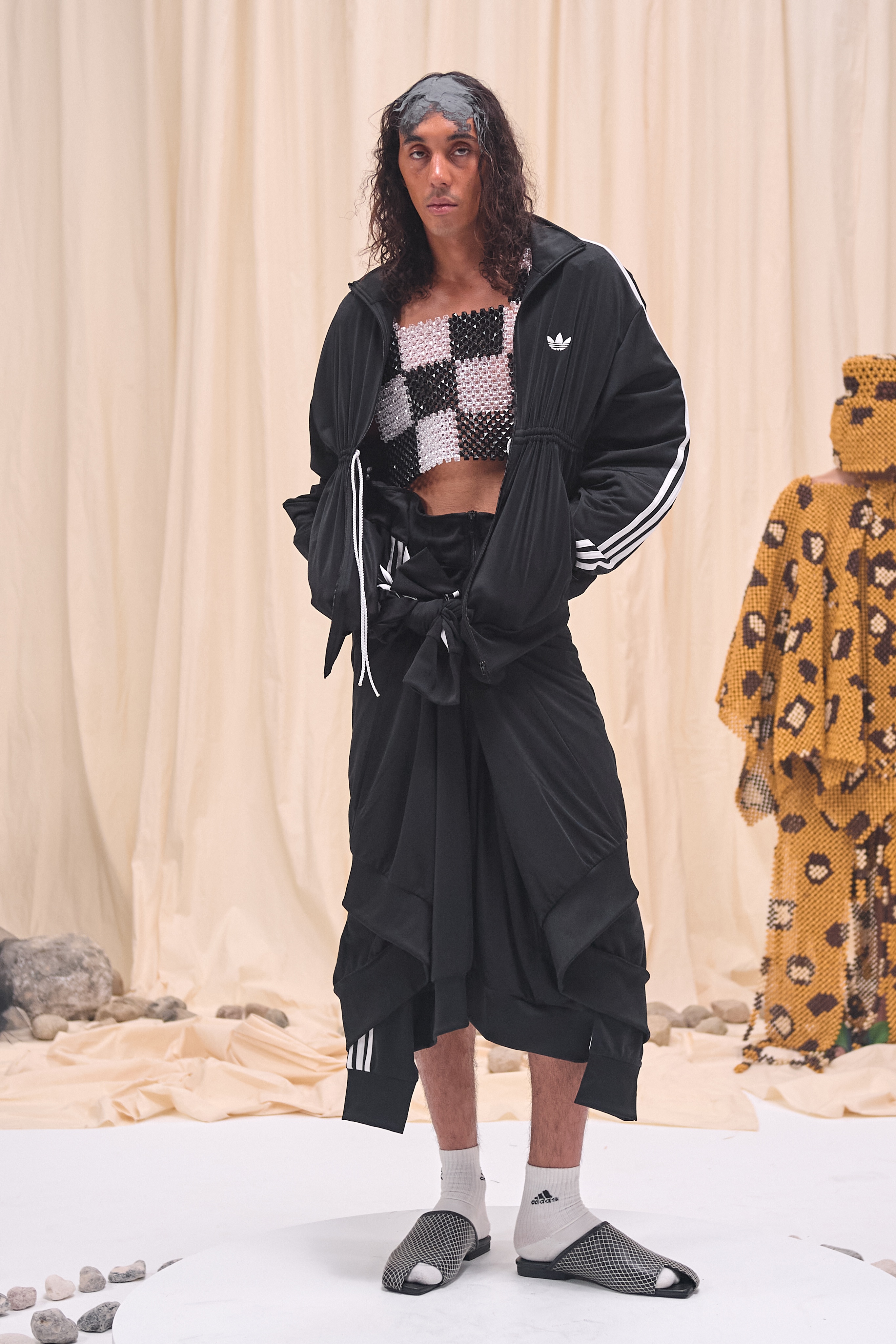
Banana fibre from Uganda, cotton and wooden beads from Nigeria, sisal from Tanzania and recycled aluminium from Kenya form a material vocabulary rooted in place. Weaving in Kenya embraces irregularity; yarn left on the loom becomes crochet, while fabric offcuts return as textured outerwear.
Nothing is wasted. Nothing is erased. At the heart of Sacred Ecologies is the idea of contemporary peripatetic pedagogies — knowledge carried through movement, passed between bodies rather than contained within institutions.
To wander, here, is to remember. The result is a collection that feels simultaneously ancient and futuristic: fashion as landscape, garment as archive, and the body as a vessel for everything that came before and everything still to come.
James Cochrane
James Cochrane
James Cochrane
James Cochrane
James Cochrane
James Cochrane
James Cochrane
James Cochrane
James Cochrane
James Cochrane
James Cochrane
James Cochrane
James Cochrane
James Cochrane
James Cochrane
James Cochrane
James Cochrane
James Cochrane
James Cochrane
James Cochrane


