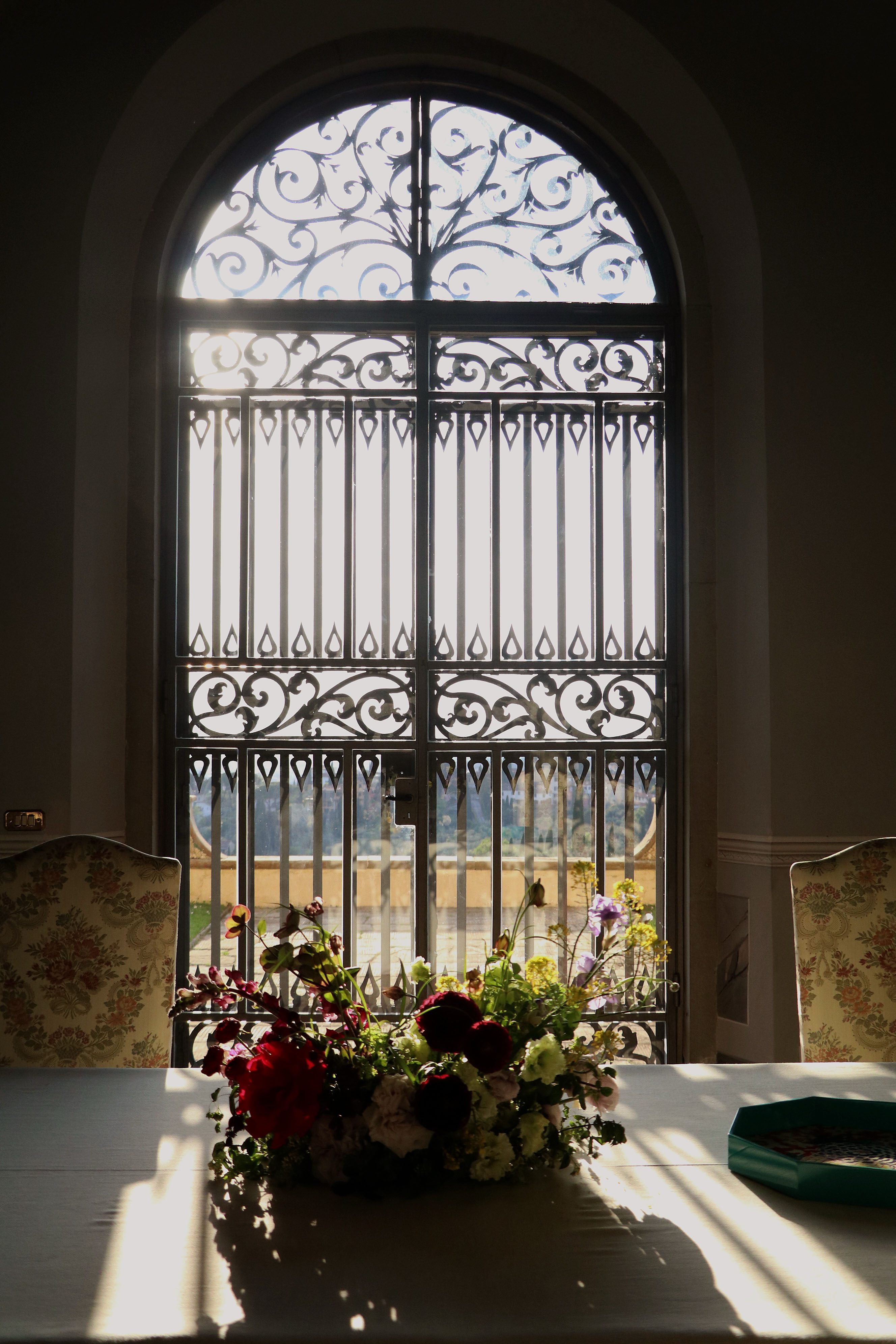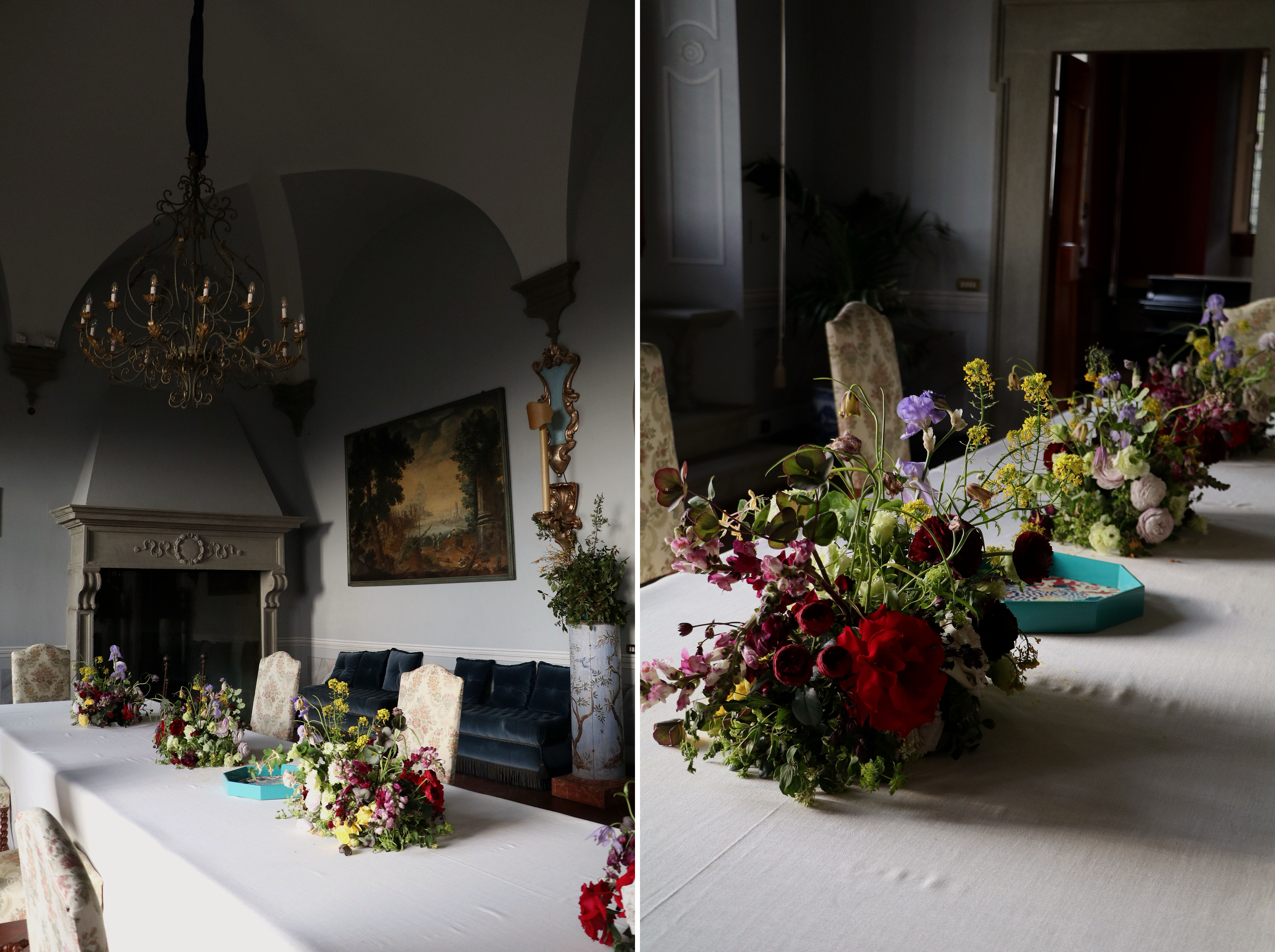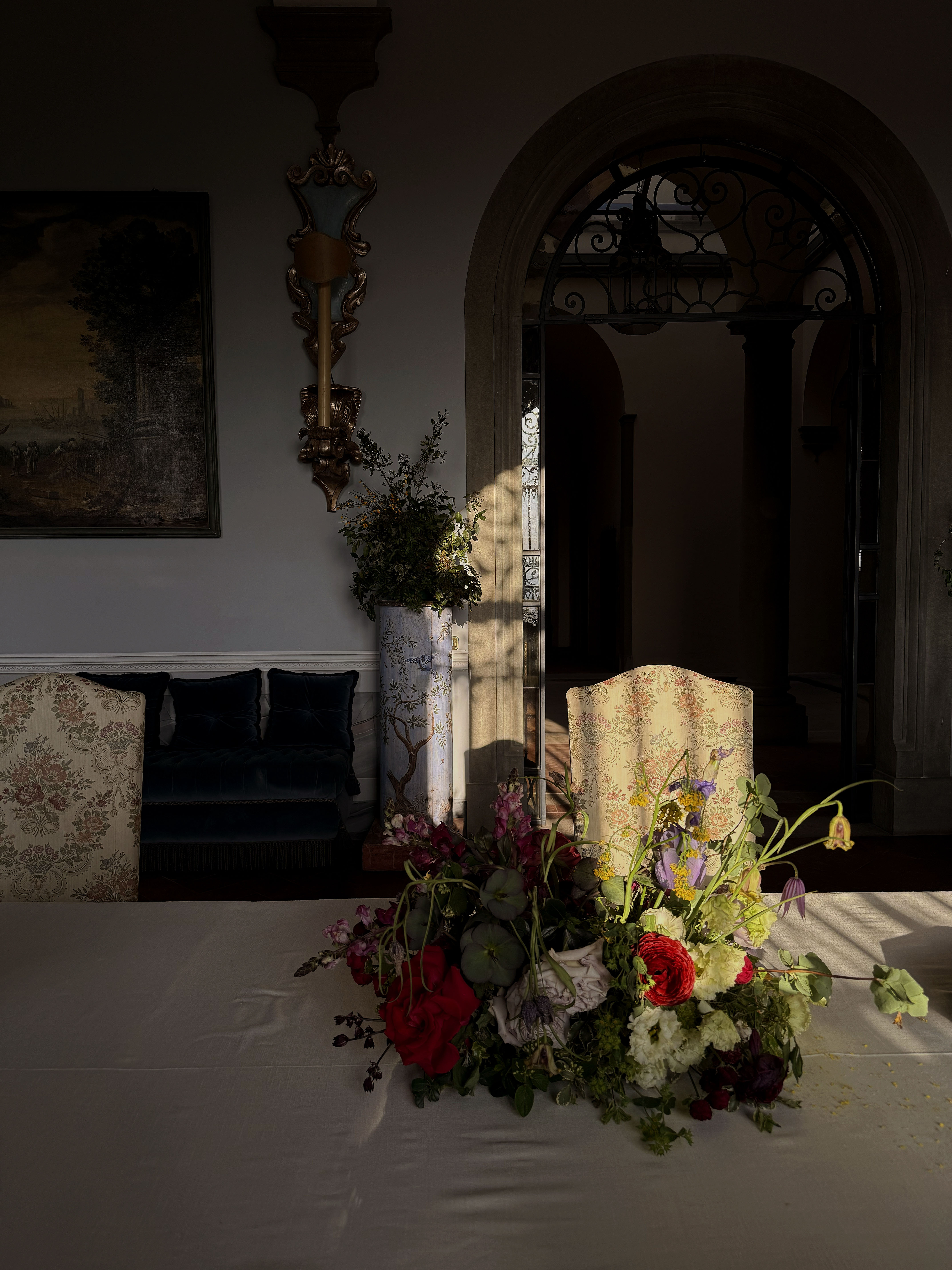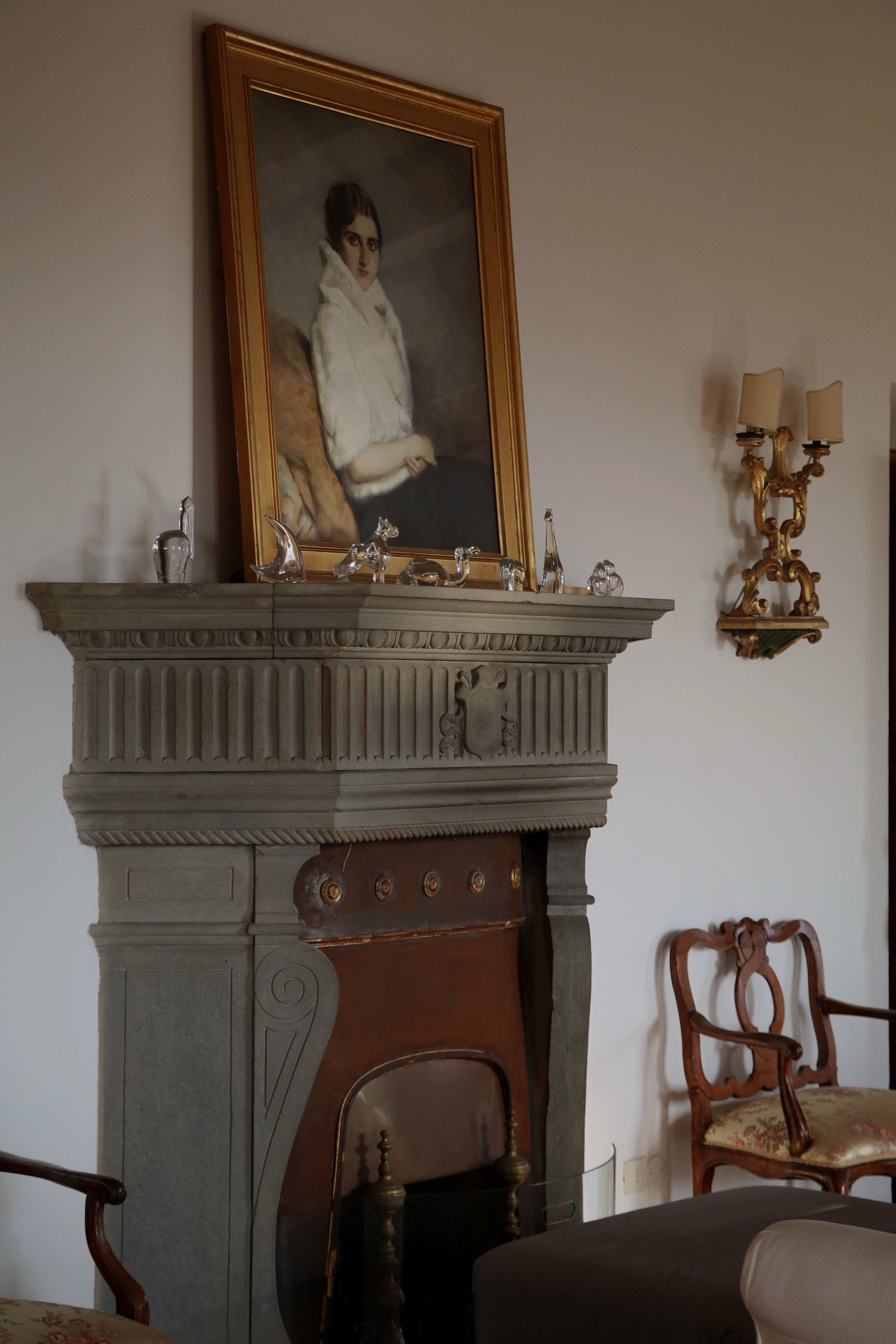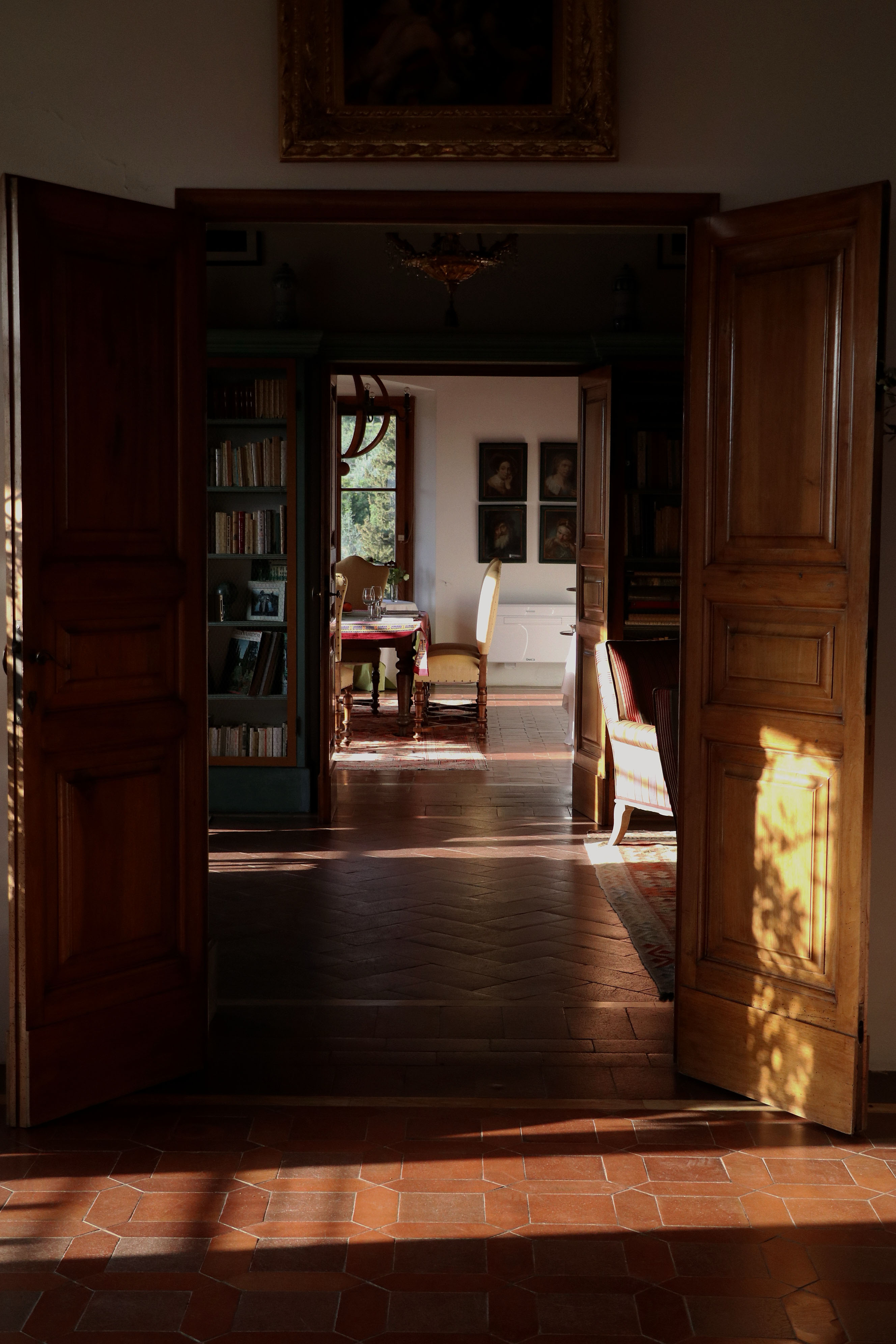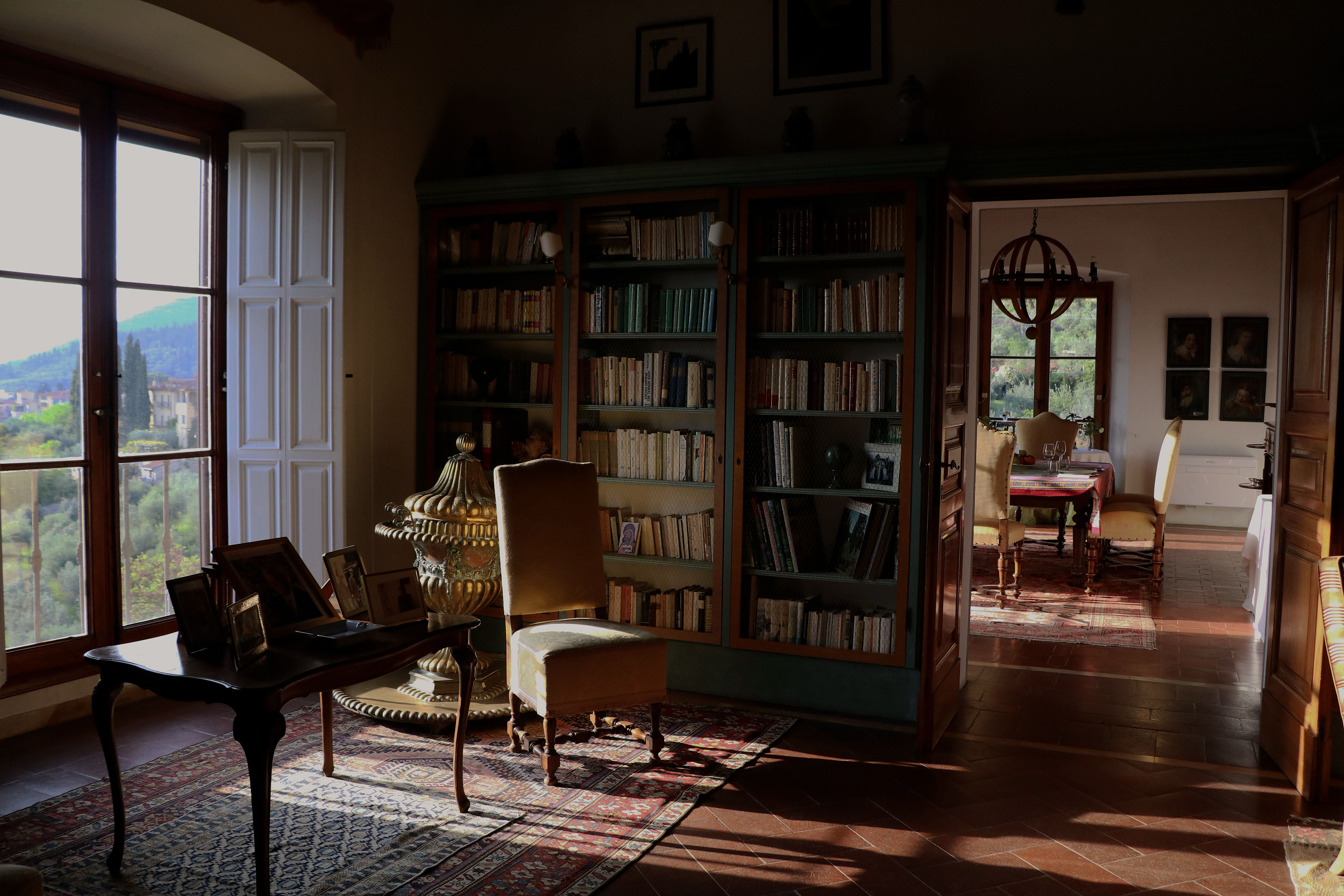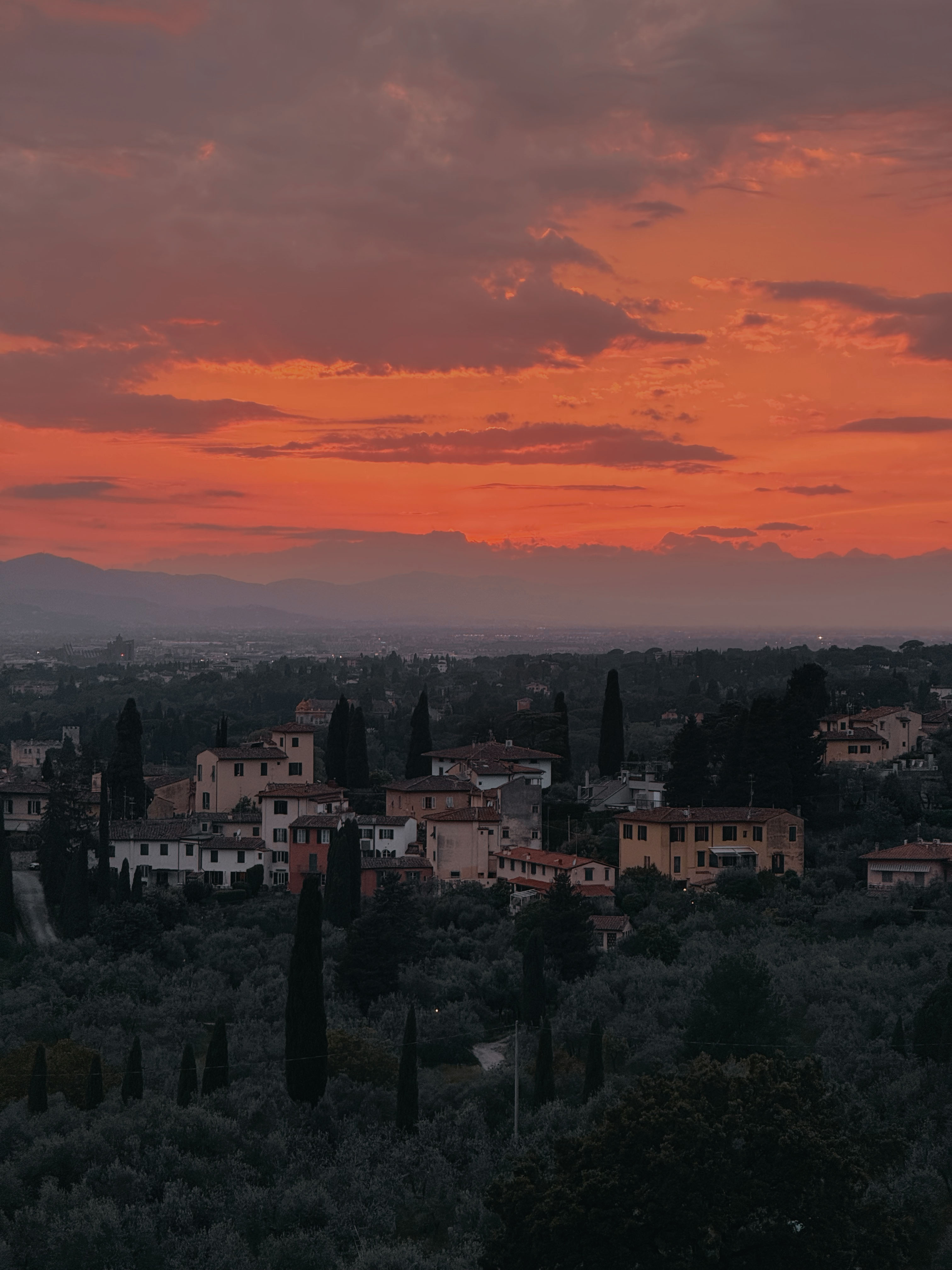
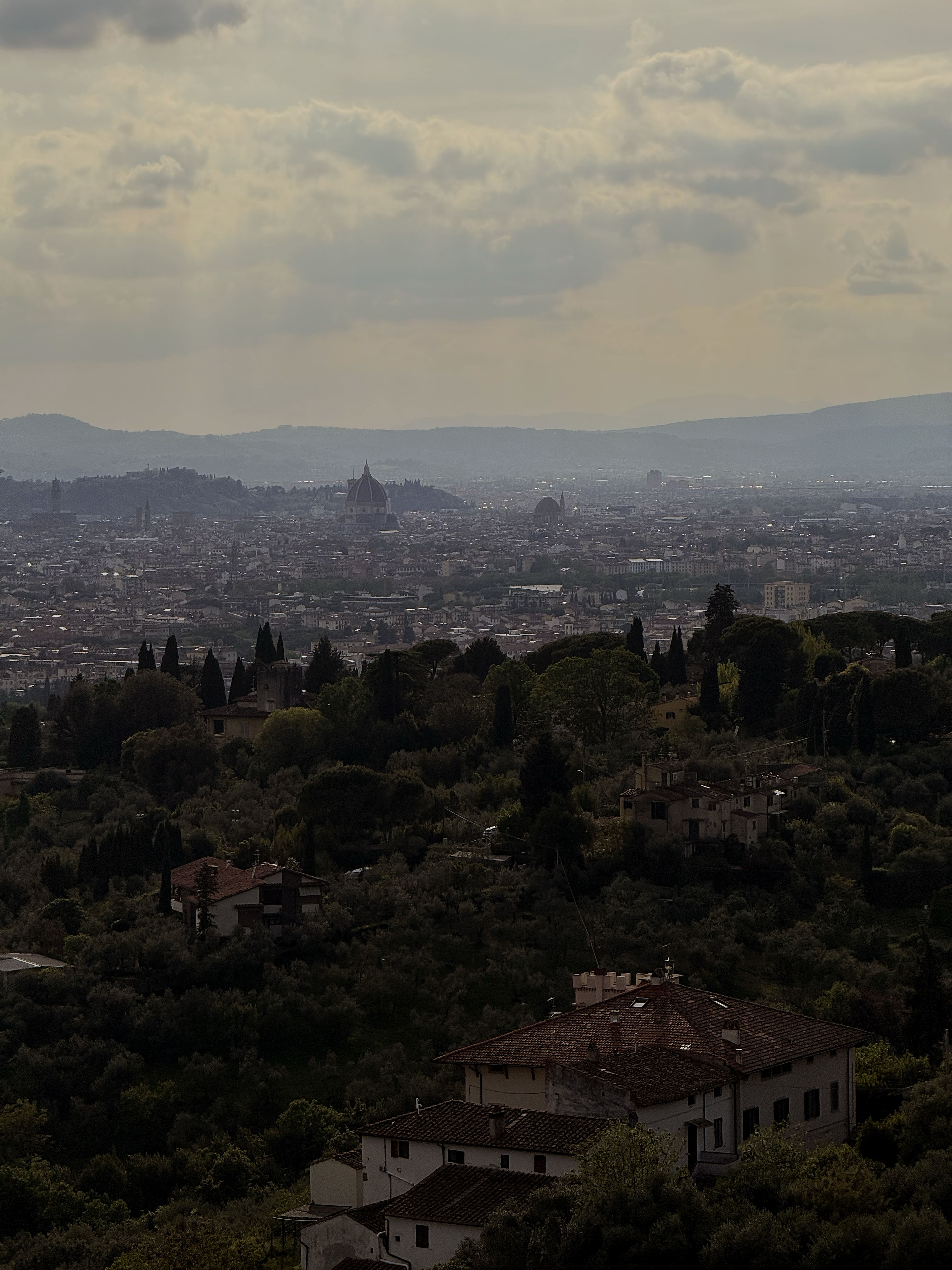
There is a particular kind of magic that belongs to Florence in the spring and summer. Days begin slowly with espresso in sunlit piazzas, afternoons disappear inside frescoed churches and hidden Renaissance palazzos, and evenings stretch endlessly over candlelit dinners, pasta, and wine. Our days in the city felt deeply inspiring: filled with art, beauty, history, and an energy that stayed with us long after each evening ended.After spending time immersed in that atmosphere, we felt ready to experience another side of Tuscany: the stillness of the countryside, slower mornings, open landscapes, and the quiet rhythm of nature. It wasn’t about leaving one beauty behind for another, but about discovering the many different ways Tuscany reveals itself. That desire led us into the hills of Settignano, where Villa Gamberaia reveals itself almost unexpectedly above the Arno Valley. Arriving there feels cinematic: winding roads lined with cypress trees, glimpses of olive groves glowing in the late afternoon light, and then, suddenly, the villa emerging like a timeless dream suspended between sky and landscape.
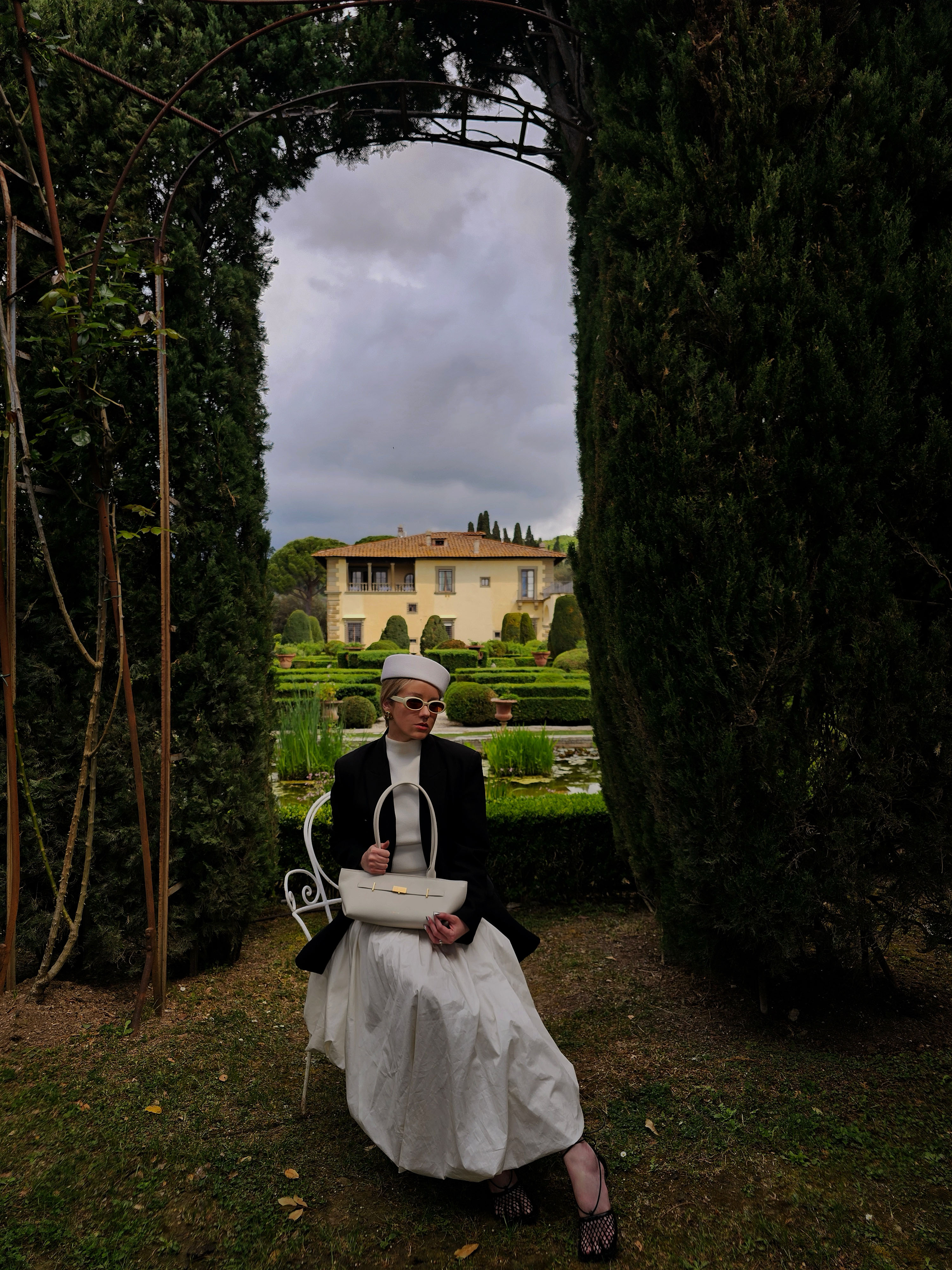
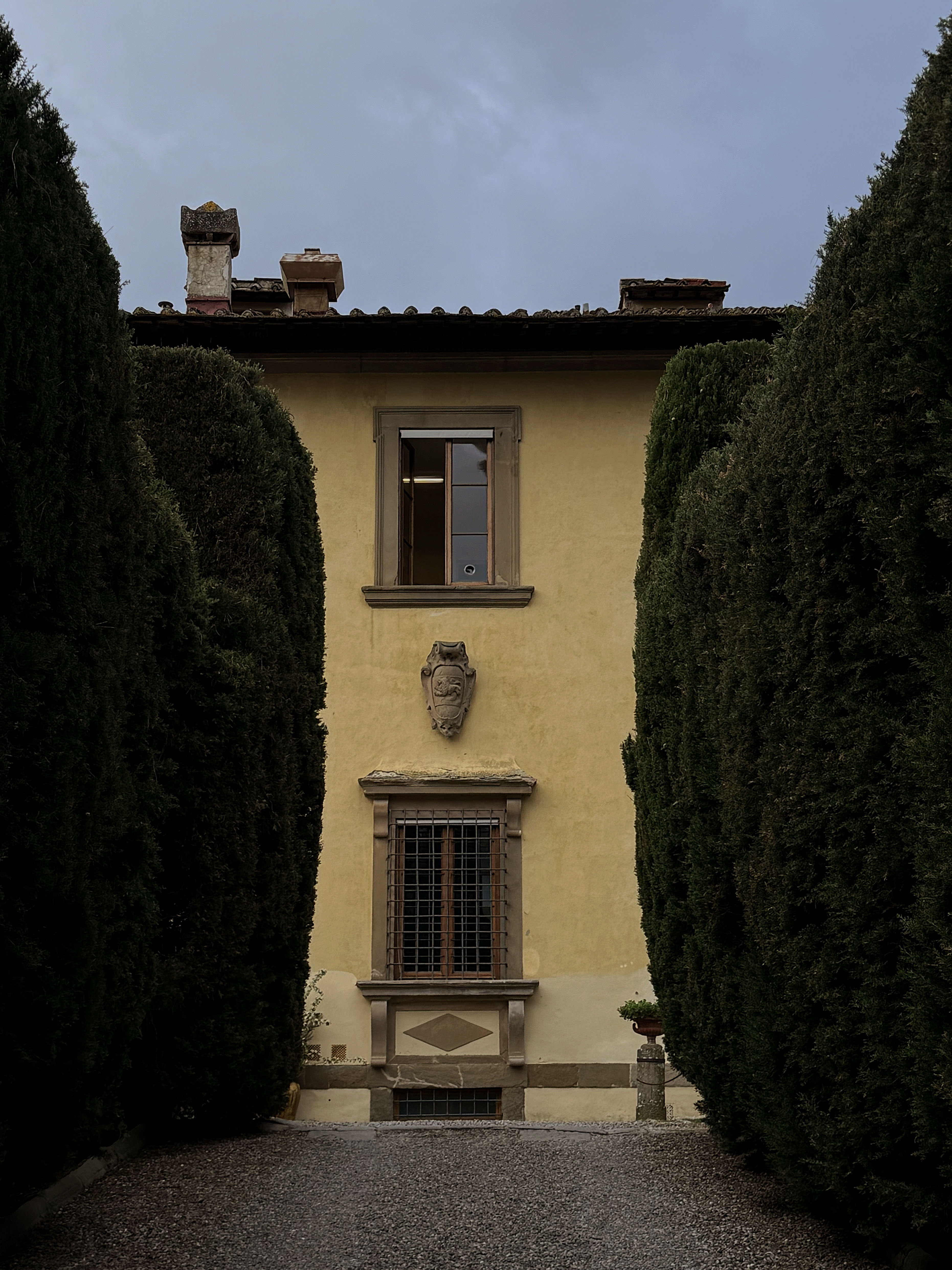
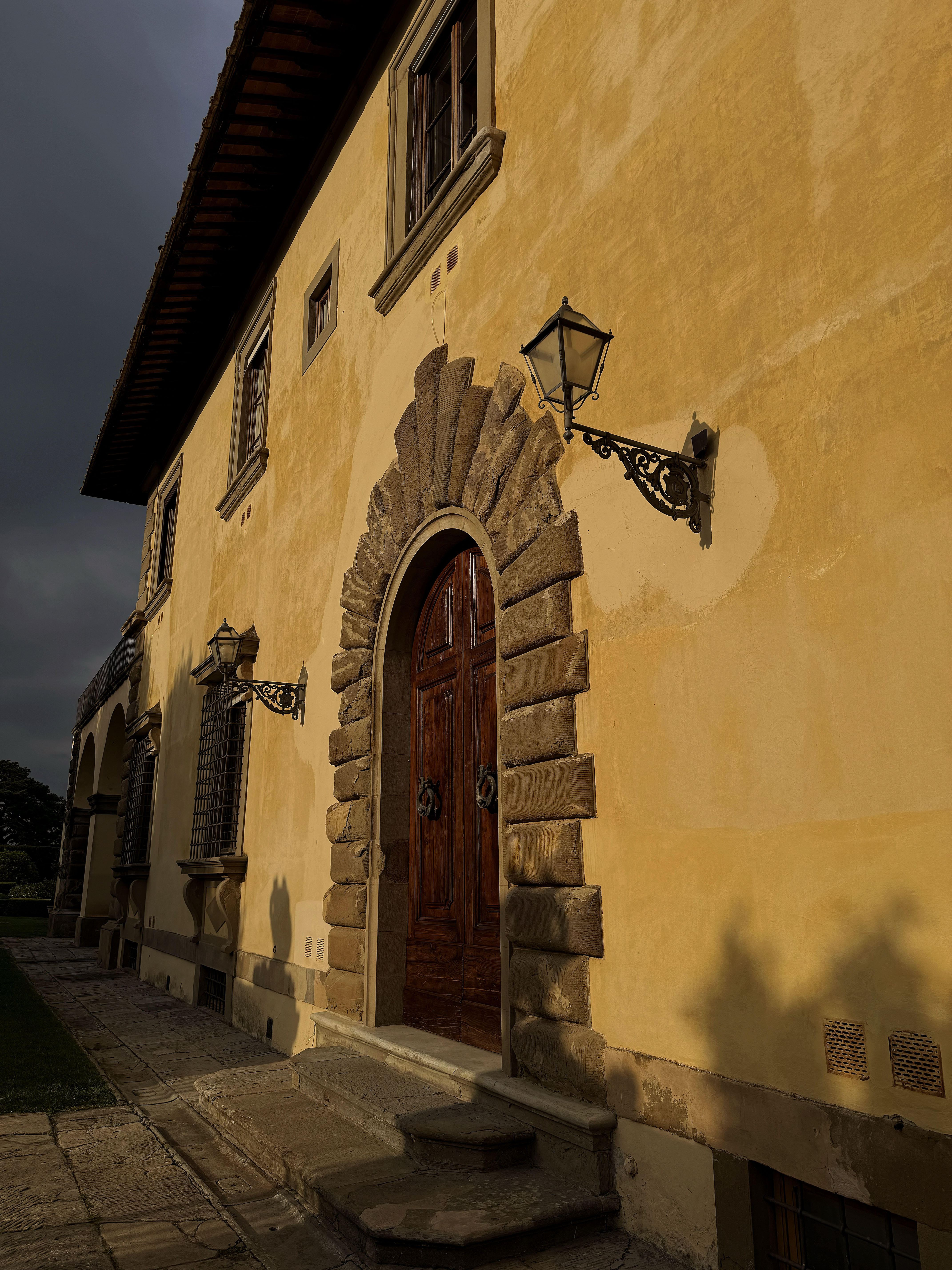
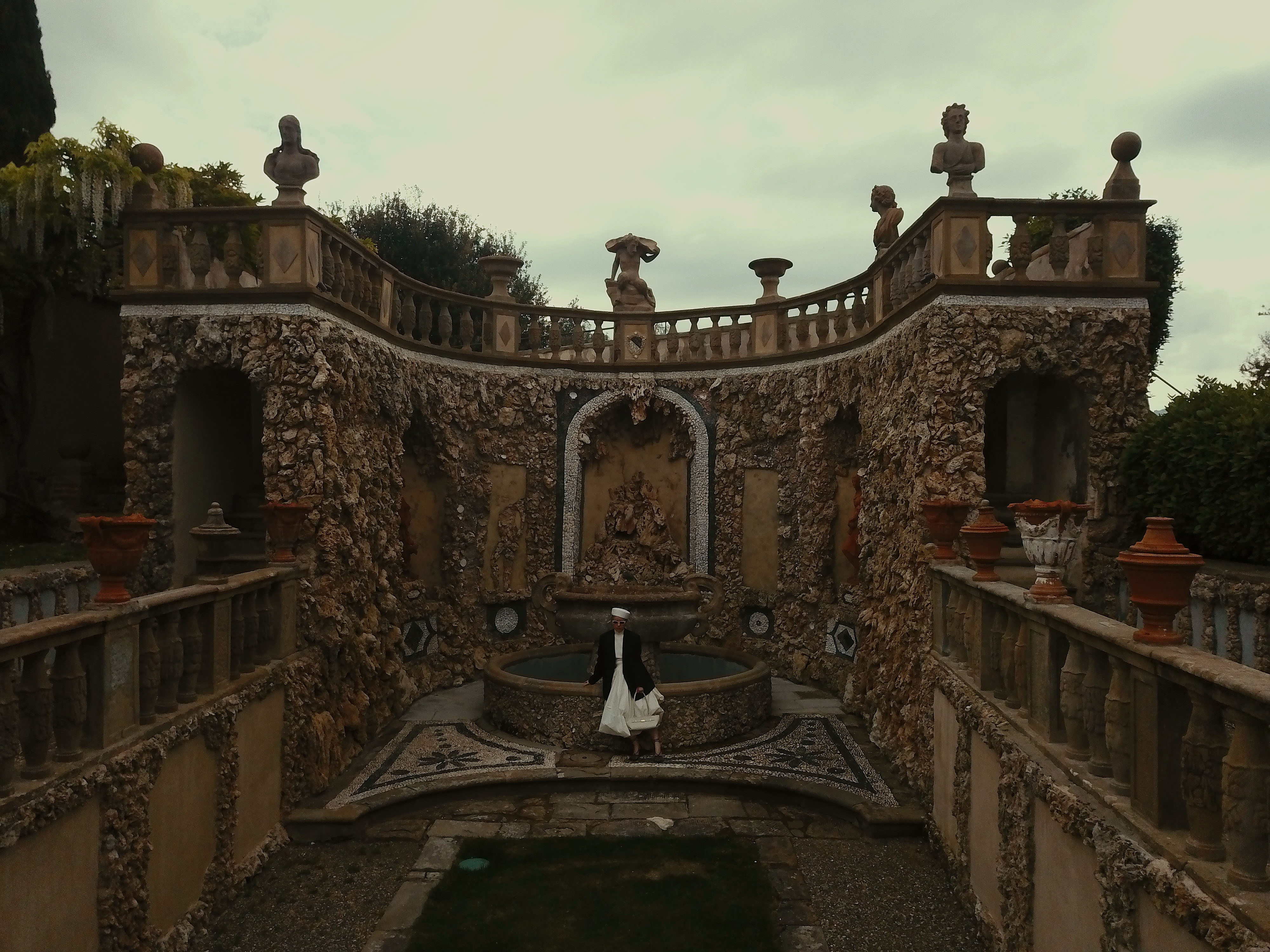
Widely regarded as one of the most exquisite gardens in Tuscany, Villa Gamberaia possesses a rare kind of elegance: one that whispers rather than shouts. Established in the early seventeenth century by the Florentine merchant Zanobi Lapi, the estate has long captivated artists, architects, writers, and visionaries with its iconic gardens, where Renaissance structure and early twentieth-century design merge in remarkable harmony.Its extraordinary landscape has inspired generations of landscape architects and art historians, and it has been celebrated internationally as one of the world’s most beautiful gardens. Standing there ourselves, surrounded by silence and cypress trees, it was impossible not to understand why.Originally established by the prominent Florentine Lapi family, the villa evolved gradually through centuries of careful restoration and stewardship. Yet despite its history, Gamberaia never feels frozen in time. Instead, it feels alive, deeply personal, and intentionally restrained. There is no unnecessary grandeur here, only proportion, silence, light, and extraordinary harmony. Every terrace, pathway, staircase, and reflecting pool exists in quiet conversation with the surrounding Tuscan landscape.
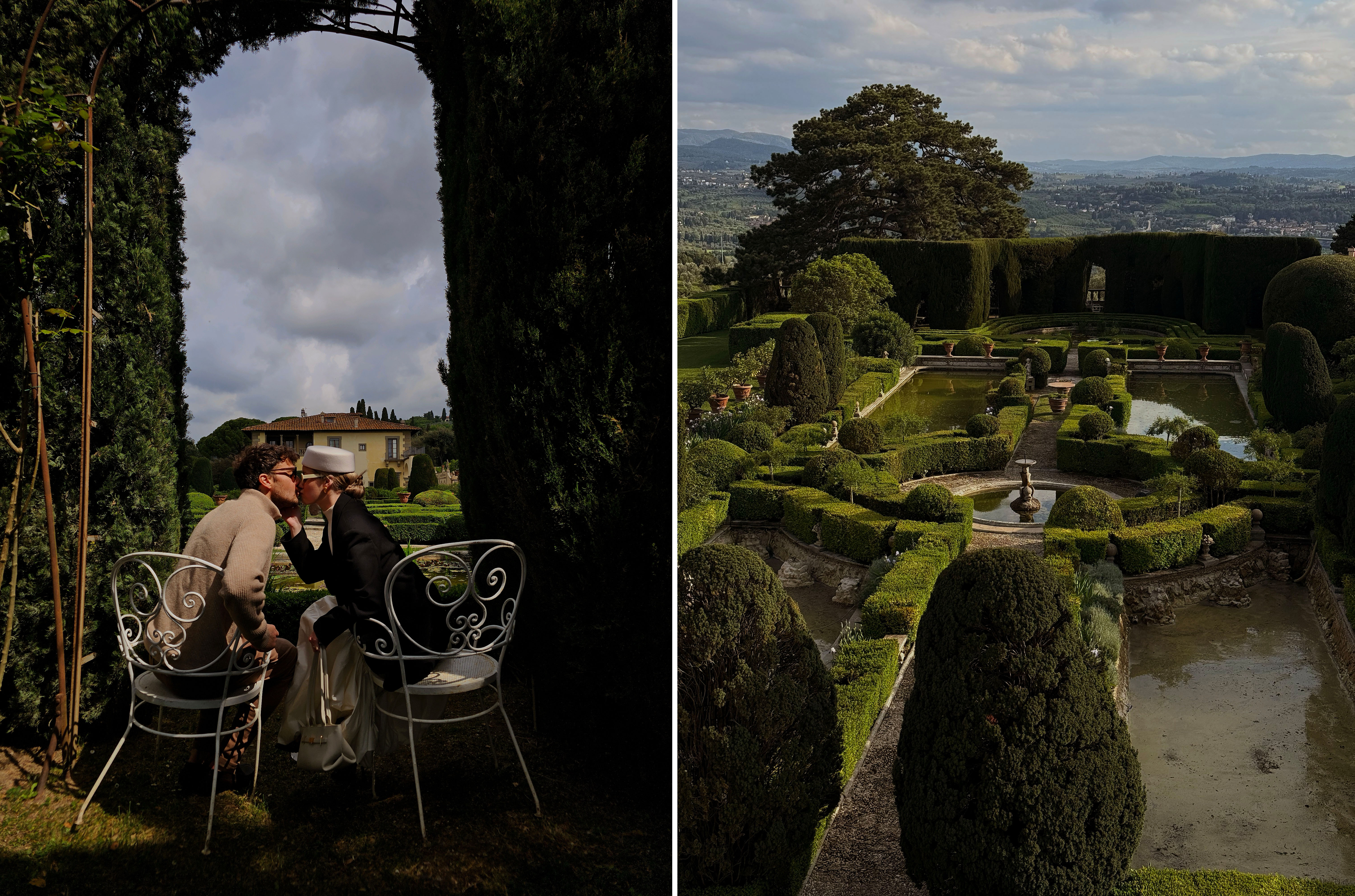
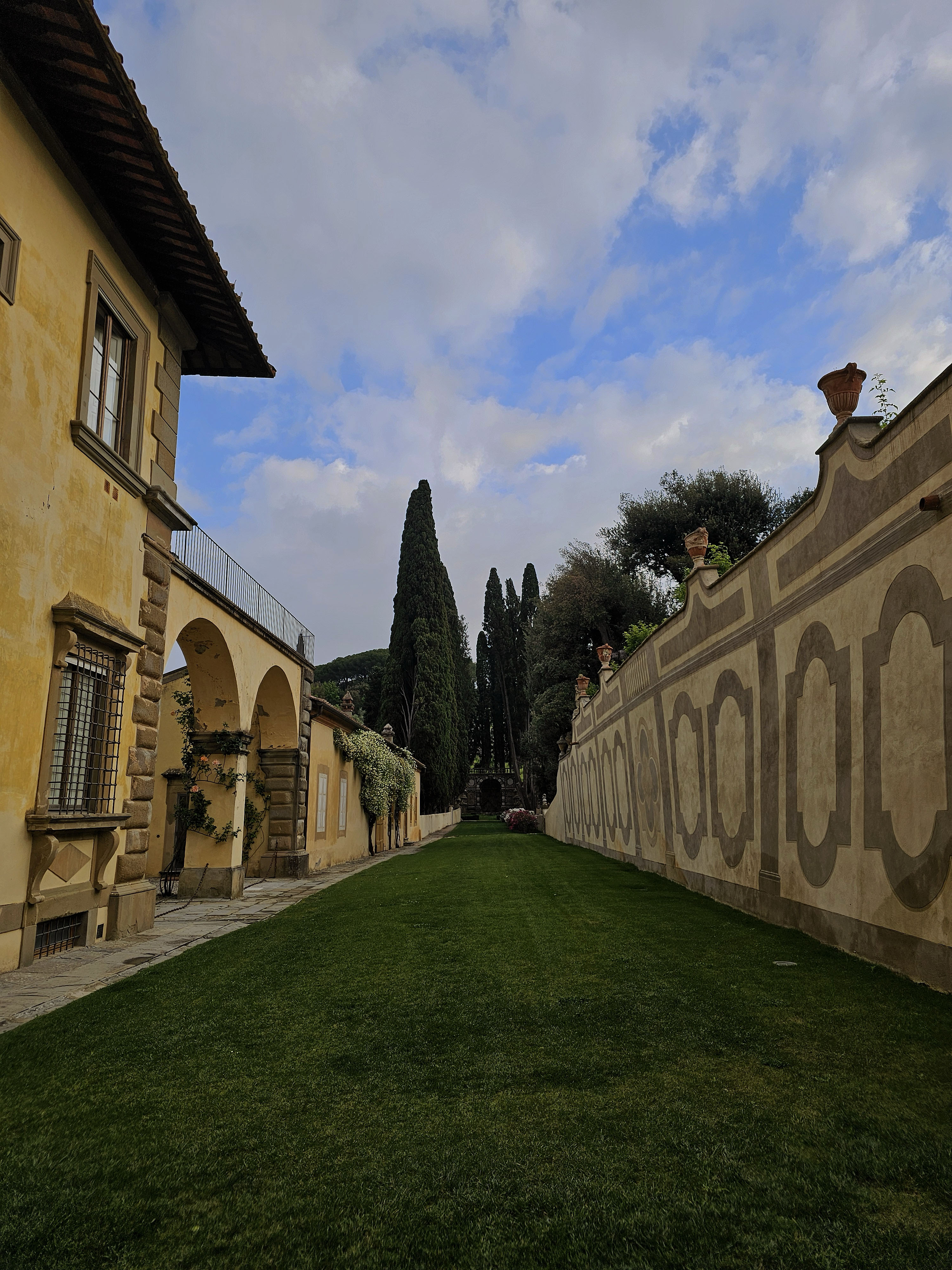
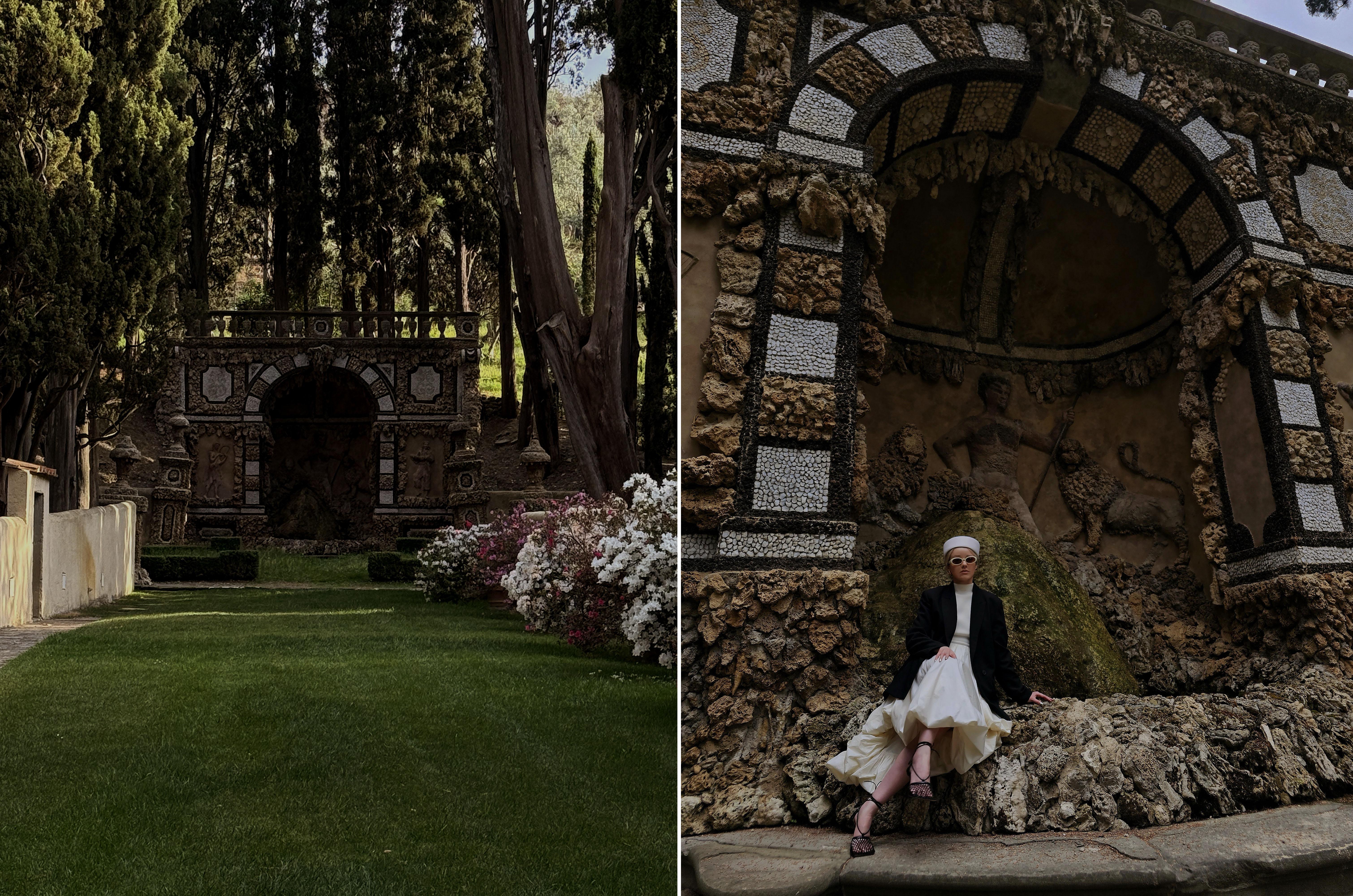
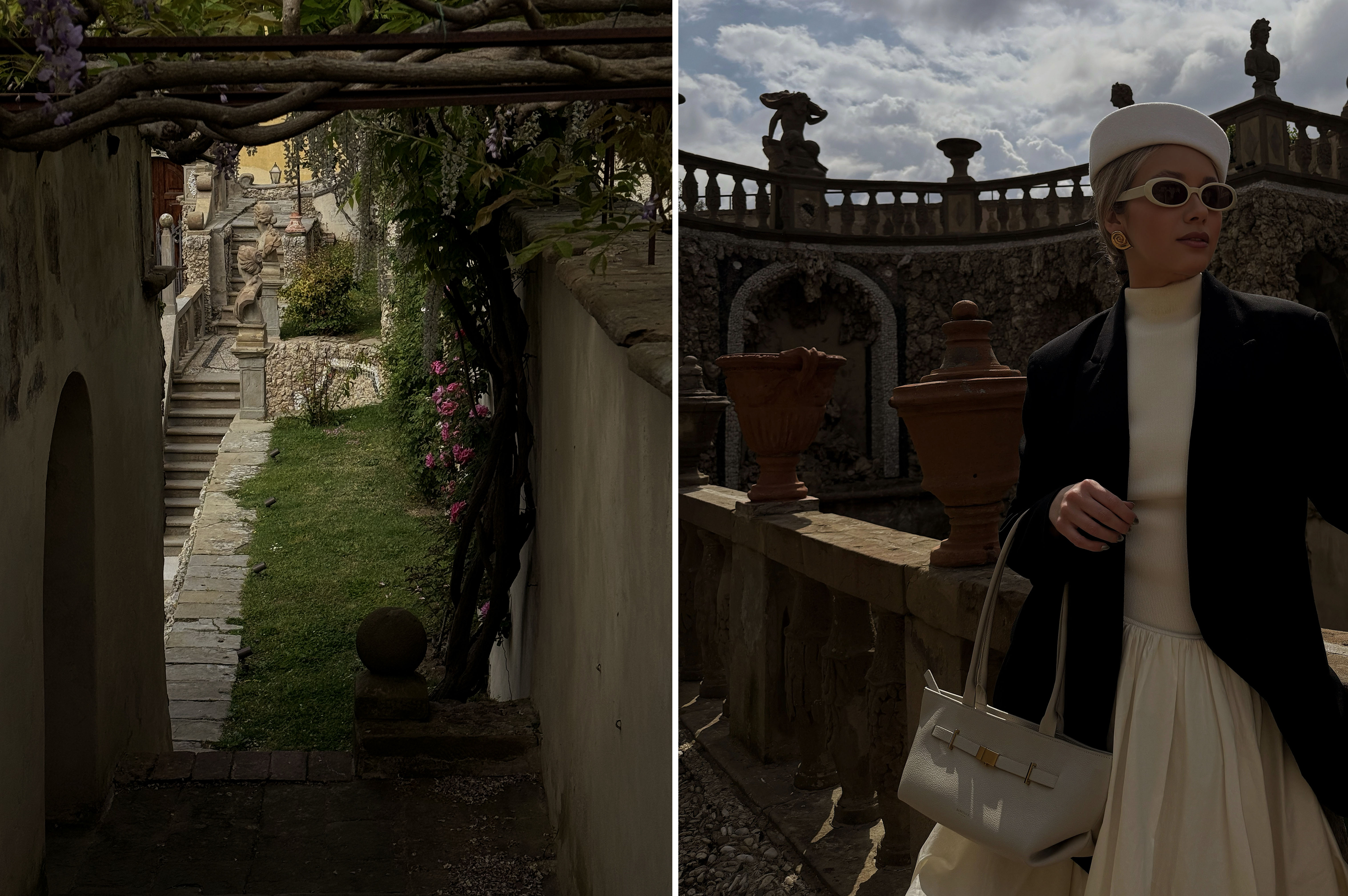
What makes the villa unforgettable is the balance it achieves between precision and softness. A cypress-lined avenue draws the eye toward the entrance, running alongside a lawn once used as a bowling green, while geometric hedges and hidden garden rooms unfold with cinematic symmetry. Lemon trees perfume the air, roses climb sun-warmed stone walls, and lavender spills gently across the pathways. Everywhere you look, the architecture dissolves effortlessly into nature.
And then there is the water parterre, perhaps Gamberaia’s most iconic feature. In the early twentieth century, Princess Jeanne Ghyka and her companion Florence Blood transformed the gardens with extraordinary sensitivity, introducing the celebrated parterre d’eau that became one of the villa’s defining images. The shallow reflective pools mirror the sky so perfectly that the garden seems suspended somewhere between earth and illusion.Unlike the theatrical grandeur of many Italian villas, Gamberaia feels contemplative, almost sacred. Walking through the gardens, the only sounds were birdsong, rustling leaves, and distant church bells drifting upward from Florence below.
The villa embodies the intellectual spirit of the Renaissance, when gardens were conceived not merely as decorative spaces, but as places of reflection, harmony, and emotional escape. Framed vistas open deliberately toward the rolling Tuscan hills, allowing the landscape itself to become part of the composition. It is this seamless dialogue between architecture and nature that continues to attract creatives from around the world today.Rather than feeling like a place to simply visit, Villa Gamberaia invites you to slow down, settle in, and live within its beauty, if only for a little while.
Our stay was brief, but it lingered long after we left.There was something about wandering through those gardens: the scent of lemon blossoms carried through the fresh air, the stillness of the reflecting pools, the golden Tuscan light settling over the hills, that felt almost unreal. Villa Gamberaia is more than a destination; it is a feeling: one of beauty, serenity, and quiet wonder. The kind of place that reminds you that beauty and romance can be deeply emotional, and why people fall in love with Tuscany in the first place.
The Entrance and the Gardens:
The House: